

A pylon sign installation may take only a short time on site. However, most problems start much earlier.
Before production ends, the sign structure must match the foundation, lifting plan, wiring, and field assembly method. This is especially important for international projects because the sign maker and local installer are often different companies.
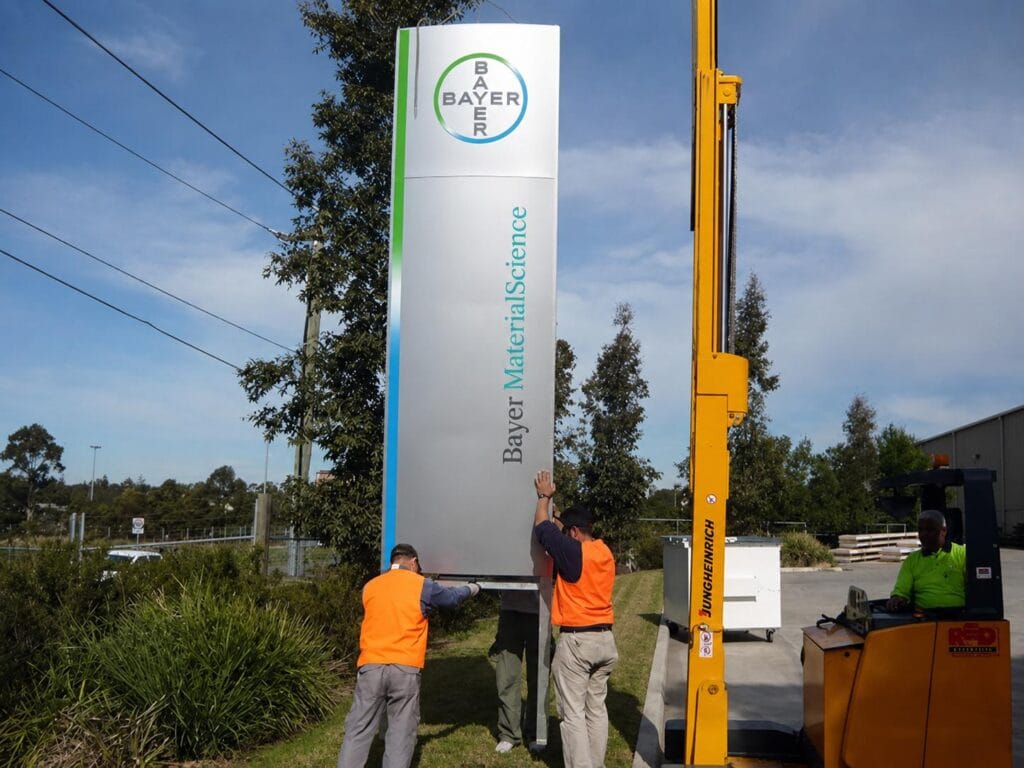
Start With the Site
First, the local team should check the site before the sign structure is final.
Important points may include:
- approved sign location and height;
- underground utilities;
- crane and truck access;
- local electrical rules;
- local structural needs.
These conditions can change the sign position, foundation, or installation method. Therefore, they should be confirmed early.
For example, crews must check for underground utilities before digging. In the United States, OSHA requires contractors to identify expected underground lines before excavation.
In short, the factory should not lock key connection details until the main site conditions are clear.
Make Sure the Foundation Matches the Sign
Next, the foundation and pylon structure must work together.
The connection may use a pole, base plate, anchor system, or another approved detail. The manufacturer can make these parts to the approved drawings.
However, the final foundation design is a local project matter. The same is true for wind-load review, structural approval, and local code compliance.
Because of this, there is no single footing size that works for every pylon sign.
Sign height, sign area, wind, soil, and local rules can all affect the final design.
The same idea applies to an old pole or foundation. An existing structure may have held the previous sign for years. Still, that does not mean it can support a larger or different sign.
For wider project planning, see our guide to commercial pylon sign planning.
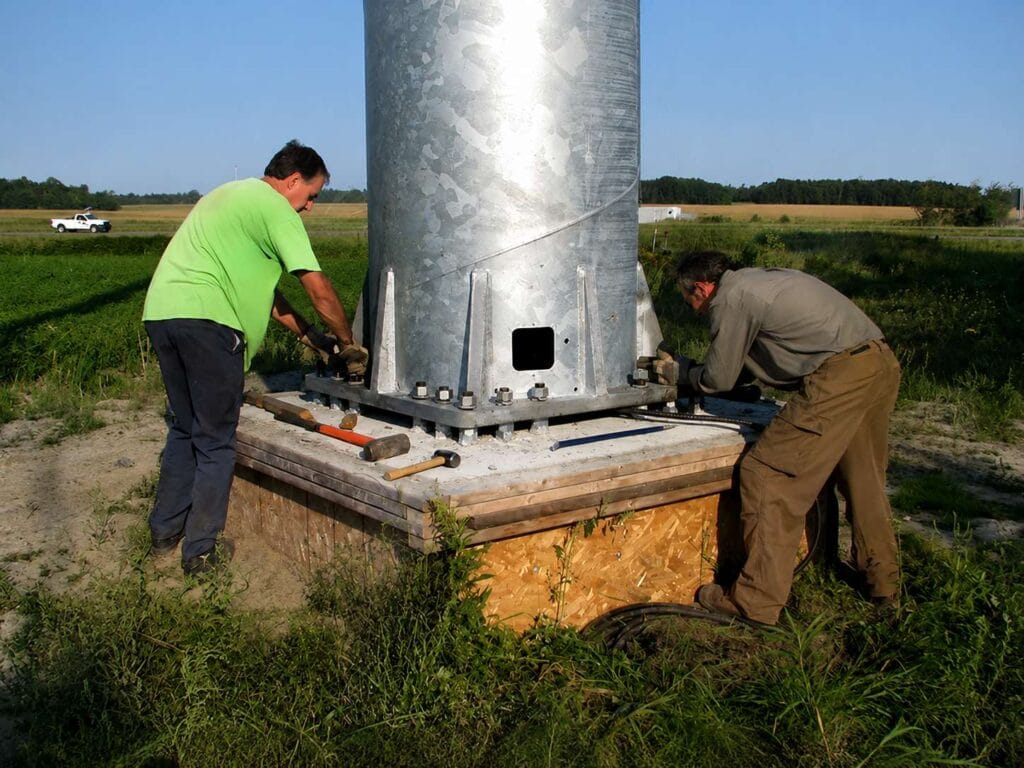
Build the Sign for the Installation Method
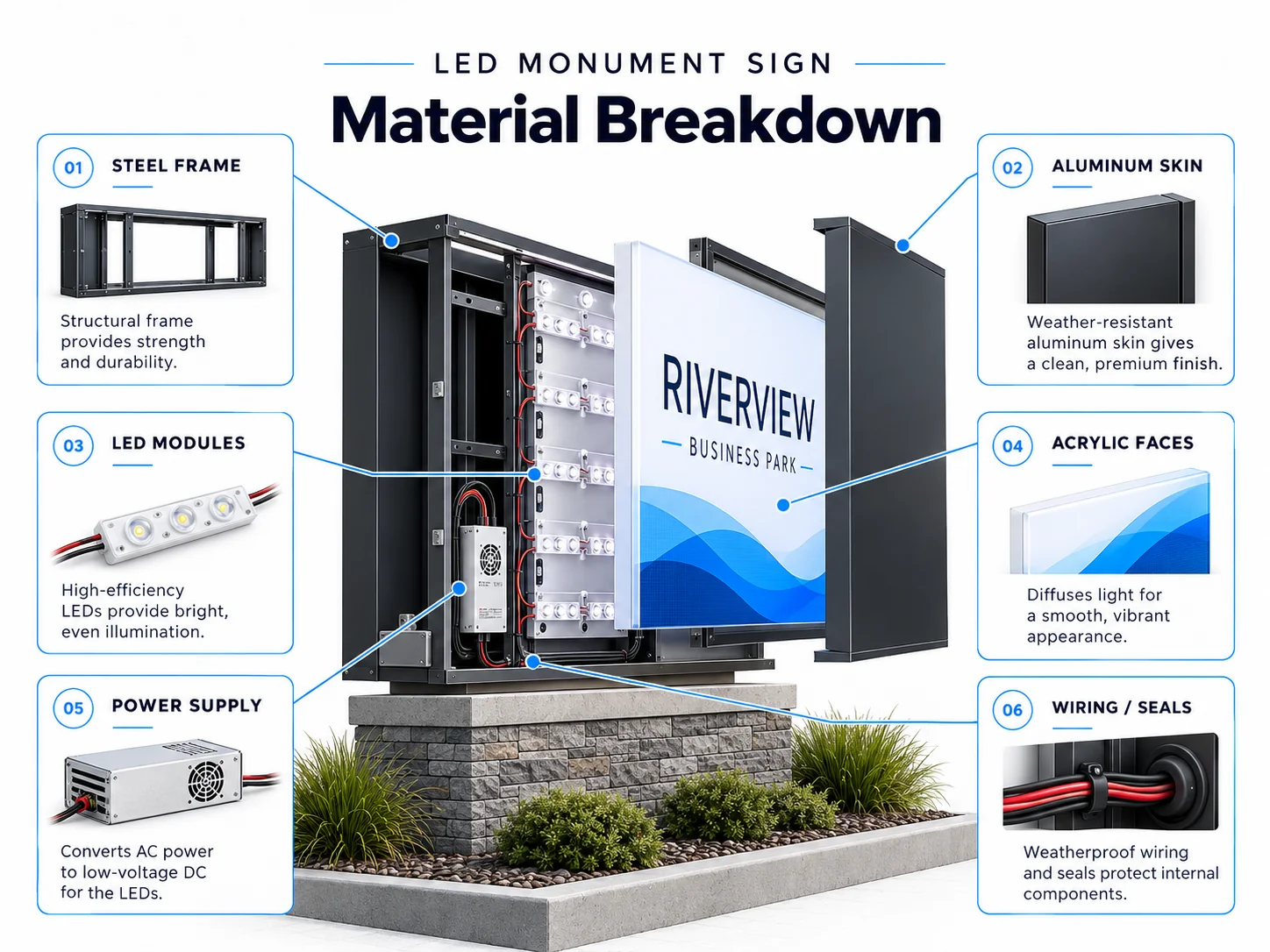
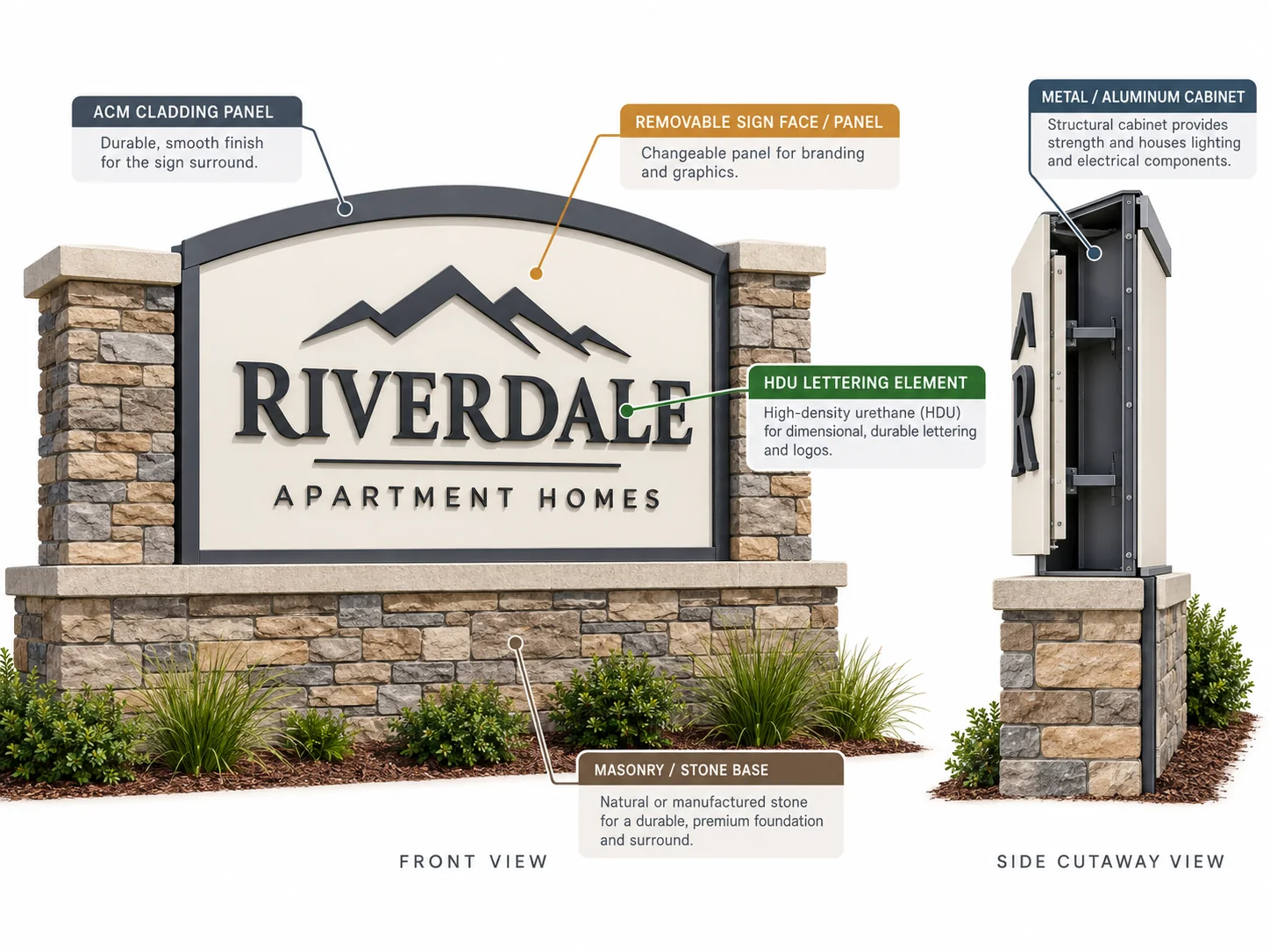
Large pylon signs often ship in several sections. As a result, the factory should think about field assembly during production.
Useful details can include:
- clear connection points;
- easy-to-reach wiring entries;
- simple modular joints;
- clear part labels;
- access for future service;
- connections that suit the lifting plan.
For example, if several sections must join on site, the installer should be able to identify each part quickly. Likewise, wiring routes should stay easy to reach after assembly.
The manufacturer does not control crane work. Instead, the goal is to make the sign easier for the local team to lift, join, wire, and finish.
Grandview’s custom pylon sign manufacturing includes drawing-based fabrication and modular production for projects that use local installation teams.

Keep Factory and Local Roles Clear
Clear roles can prevent delays and confusion.
The manufacturer may handle:
- fabrication drawings;
- cabinets and faces;
- metal fabrication;
- LED integration;
- finishing;
- factory assembly checks;
- part labels;
- packing and export coordination.
Meanwhile, the local project team normally handles:
- permits;
- foundation engineering;
- wind-load calculations;
- structural approval;
- utility checks;
- crane work;
- onsite electrical work;
- inspection;
- final installation.
Therefore, factory-ready does not mean site-approved.
Both sides need to work from the same project plan. However, they have different jobs.
Check Key Details Before Packing
Finally, the factory should check the parts that are hard to fix after delivery.
For a modular pylon sign, this may include:
- section fit;
- connection points;
- wiring labels;
- access panels;
- sign face alignment;
- lighting operation.
These checks do not replace local inspection. Instead, they help reduce simple assembly problems after the sign arrives.
As a result, the local installer can spend less time fixing avoidable factory-side issues.
FAQ
Can an existing pylon sign pole or foundation be reused?
Sometimes. However, it should be checked before reuse.
A larger sign, extra weight, a new shape, or a different connection may change the structural needs. Therefore, the old pole and foundation should be reviewed for the new sign and the local site.
Who is responsible for the pylon sign foundation and installation?
For international projects, the manufacturer usually makes the sign and provides the needed fabrication or assembly details.
The local team normally handles the foundation, permits, structural approval, crane work, onsite electrical work, inspection, and final installation.
If a local contractor will install your pylon sign, Grandview can help review the fabrication and assembly details before production.