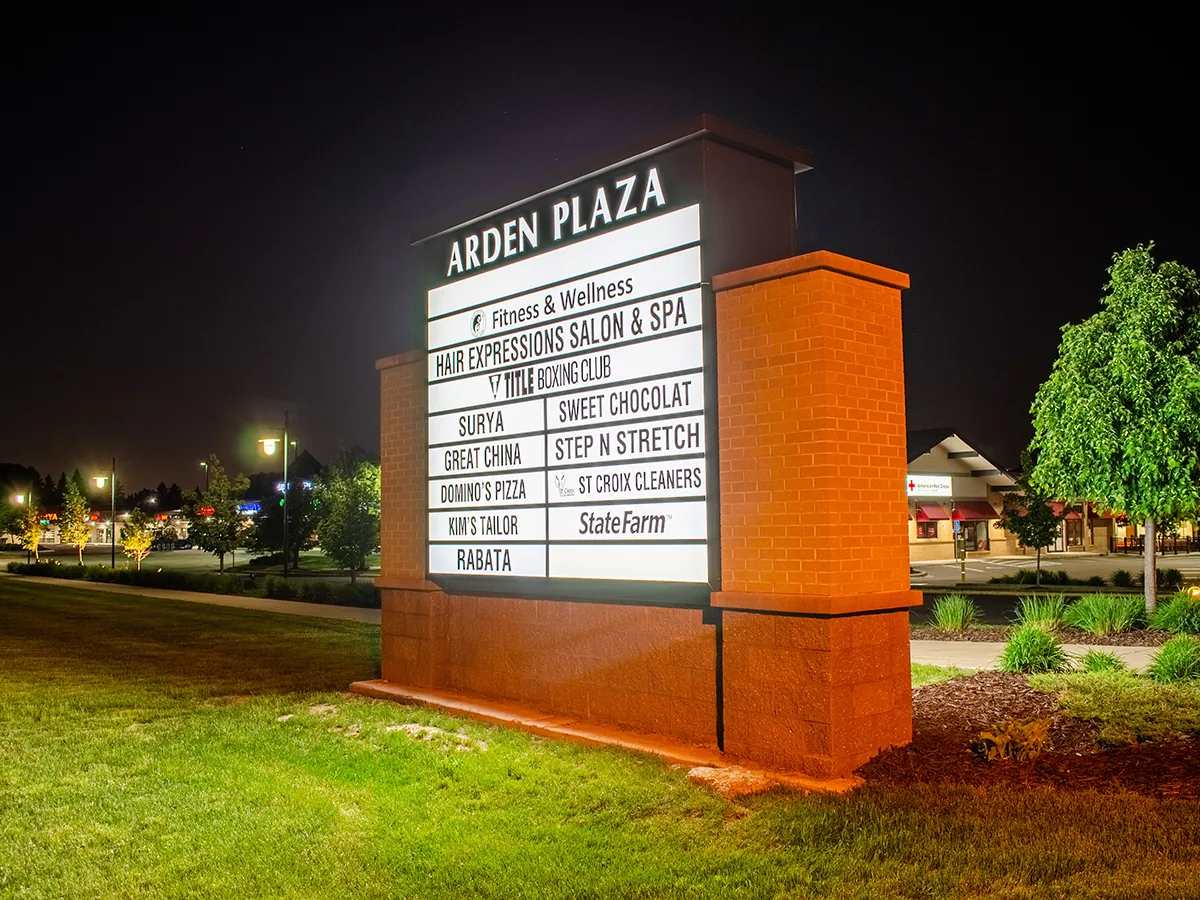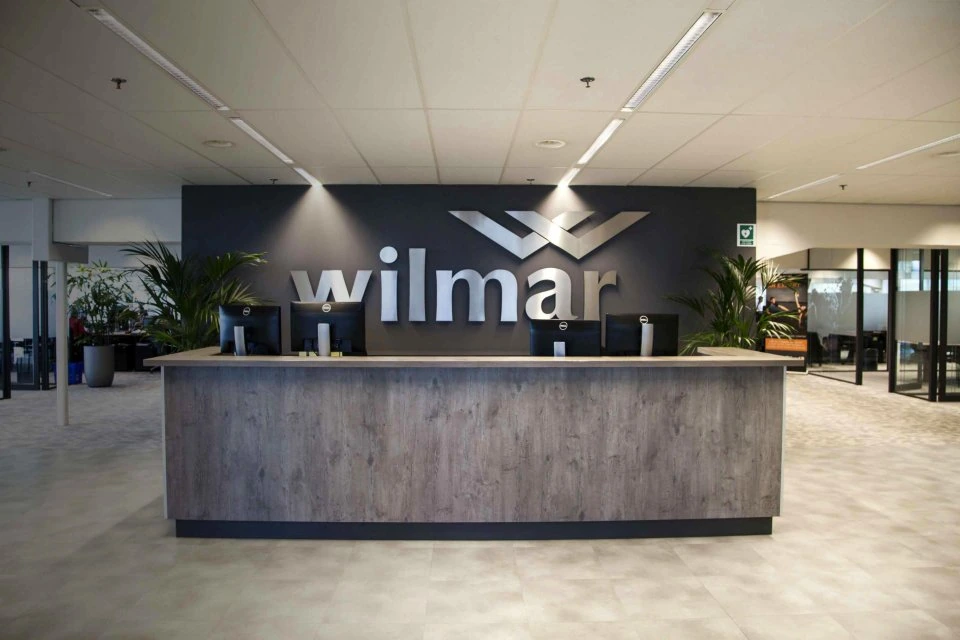


Monument sign lighting starts with a question: what needs to be visible after dark—the whole sign face, the brand name, or the architectural surface? Internal cabinets light panels; halo letters glow from behind; external fixtures illuminate the surface; push-through acrylic lights selected details.
The choice also depends on new-build or retrofit conditions, available power, and future servicing. Renderings cannot settle those questions.

Compare Four Monument Sign Lighting Options
First compare the desired visual effects.
| Option | Visible Effect | Choose When | Check Before Approval |
|---|---|---|---|
| Internal LED cabinet | Illuminated sign panel | Multiple tenant names need clear identification | Face diffusion, cabinet space, access |
| External lighting | Monument surface is lit | Stone or masonry finish should remain visible | Fixture space, power route, glare |
| Halo-lit letters | Glow behind individual letters | Hotel or office identity calls for restrained illumination | Background finish, mounting distance |
| Push-through acrylic | Logo or letters glow through a solid face | Metal-faced monument needs selected illuminated details | Fine letter strokes, face fabrication |
These are effects and construction methods, not mutually exclusive light sources. Push-through elements may use cabinet LEDs; halo letters use concealed lighting.
Choose for the Site, Not Just the Rendering
For a new sign, confirm the face, cabinet, or lettering can produce the desired effect. For a retrofit, assess what can be reused. Changing the effect may require more than new LED modules.
Think about who needs to read the sign. Drivers approaching from an angle may need an immediately recognizable panel, while visitors walking toward an office entrance may read dimensional letters comfortably. Test the choice against normal viewing directions, not just a straight-on elevation.
Next, consider the backdrop. Halo lighting needs a suitable background. External lighting suits some stone monuments, but only when fixtures can be positioned, shielded, powered, and maintained without blockage or glare. Growing landscaping may later block the light.
Power is another early filter. Cabinets need electrical connections and service access; external fixtures need workable cable routes and positions. Without these, the preferred option may be impractical.
Verify local sign and lighting rules; approval at another property proves nothing. For broader design choices, see Grandview’s monument sign design guide.
Understand What Changes Inside the Sign
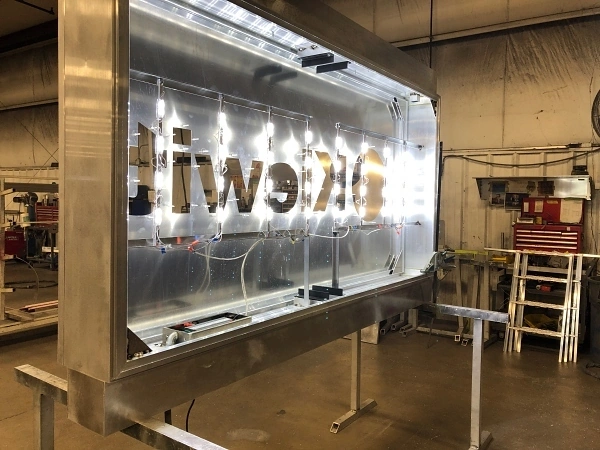
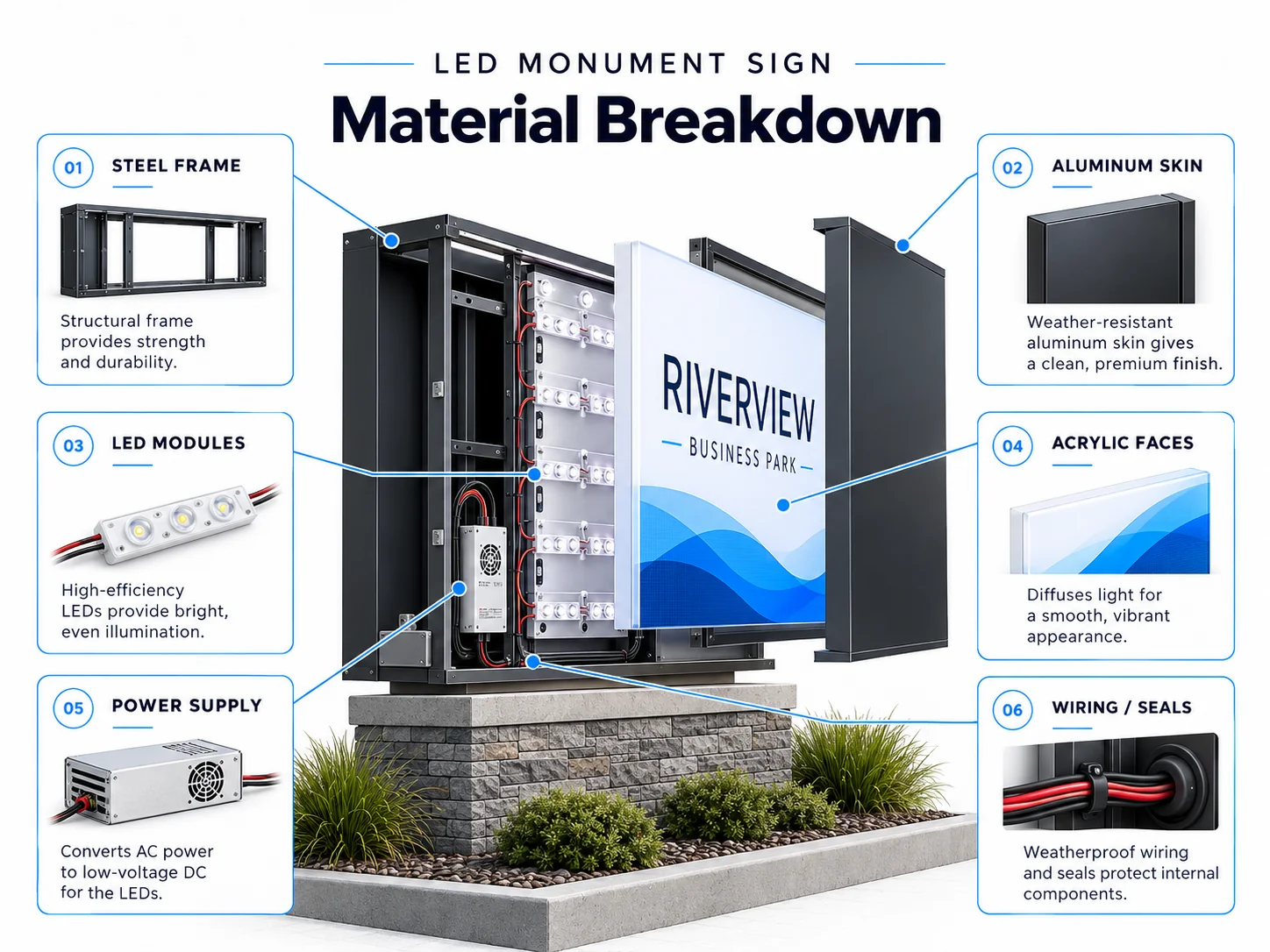
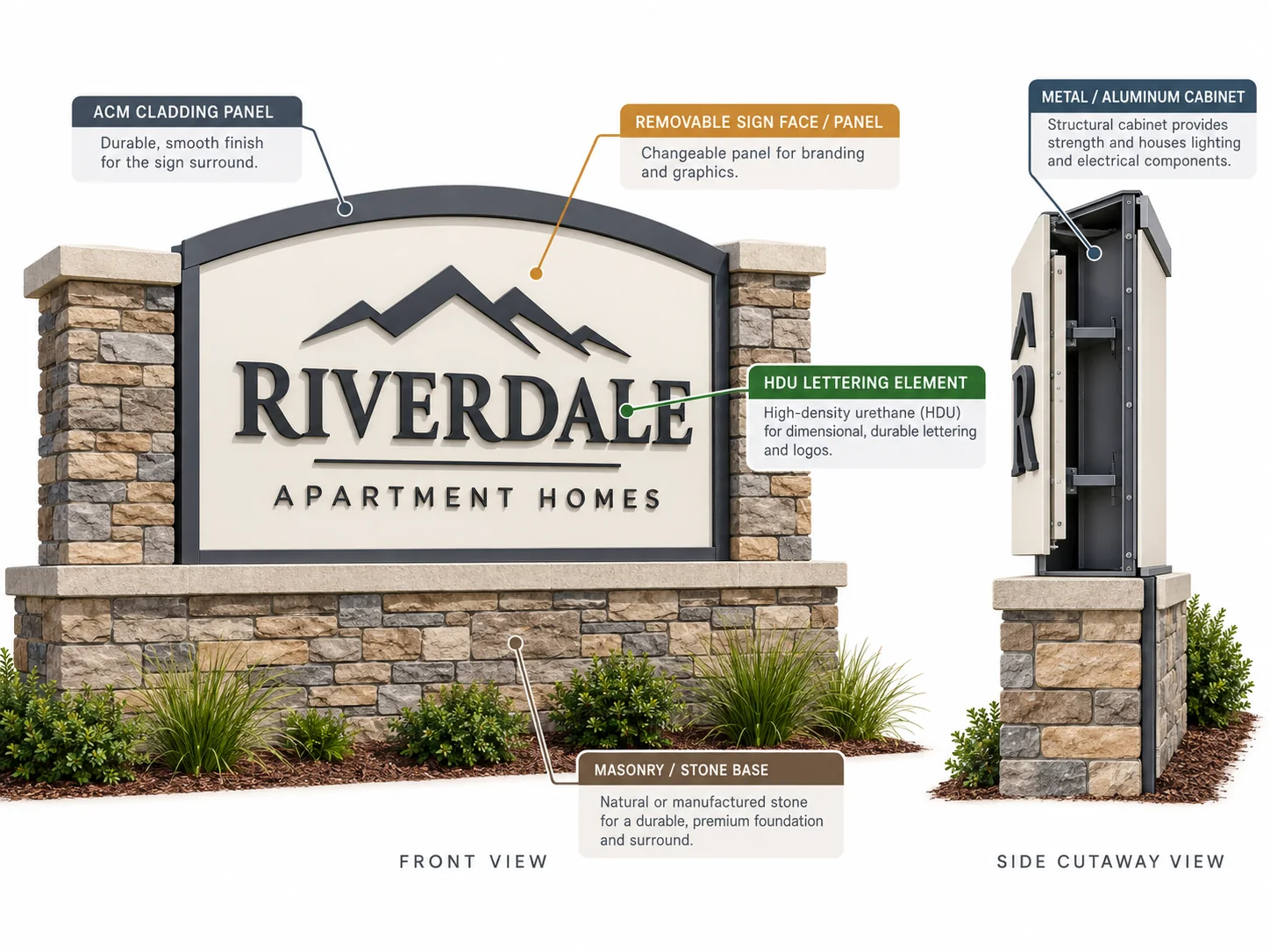
Different effects require different components. An illuminated cabinet depends on LED placement, cabinet depth, and face diffusion. Halo letters depend on their mounting arrangement and the background finish. Push-through acrylic introduces the fit between routed metal openings and illuminated material.
A face that looks right by day may show color shifts, hotspots, or shadows at night. Do not approve the effect from a rendering alone. Review an illuminated sample or comparable day-and-night photos, without treating them as proof of your own result.
Inspect the existing installation both unlit and illuminated. A discolored face may alter the result even after new LEDs are fitted; signs of moisture or inaccessible electrical compartments can also change the scope of an upgrade.
In a retrofit, keep the cabinet only if its condition, face compatibility, electrical supply, and access permit reuse. Water damage, inaccessible parts, or switching to halo letters may require reconstruction. Confirm on site.
Check the Finished Lighting Before Approval
Before approval, check for hotspots, dark areas, light leaks, color changes, and readability from the approach direction. Verify concealed wiring and access to power supplies and replaceable parts.
Record the approved appearance in photographs showing face color, illuminated areas, letter definition, and viewing direction. Those references help buyer and fabricator review the same result, while still allowing for site differences.
For external fixtures, check shielding and obstructions. Workshop photos cannot replace a site check of ambient light and fixture placement.
The International Sign Association’s sign-lighting guidance explains that electric-sign construction varies and local sign ordinances can affect design. Verify site-specific illumination restrictions with the responsible authority. Manufacturers handle agreed fabrication and lighting integration; qualified local parties handle permits, site engineering, electrical connections, and installation.
Frequently Asked Questions
Can existing monument sign lighting be upgraded without replacing the whole sign?
Sometimes. Reuse depends on the cabinet and face condition, electrical compatibility, service access, and whether the desired result needs a different structure.
Is halo lighting always better for an architectural monument sign?
No. Its appearance depends on letter design and the background surface. External lighting or a selectively illuminated face may better match the property and available installation space.
Choose the nighttime effect first, then rule out any option that cannot meet the site’s power, mounting, local approval, and service needs. For fabrication options, see Grandview’s custom illuminated monument signs.