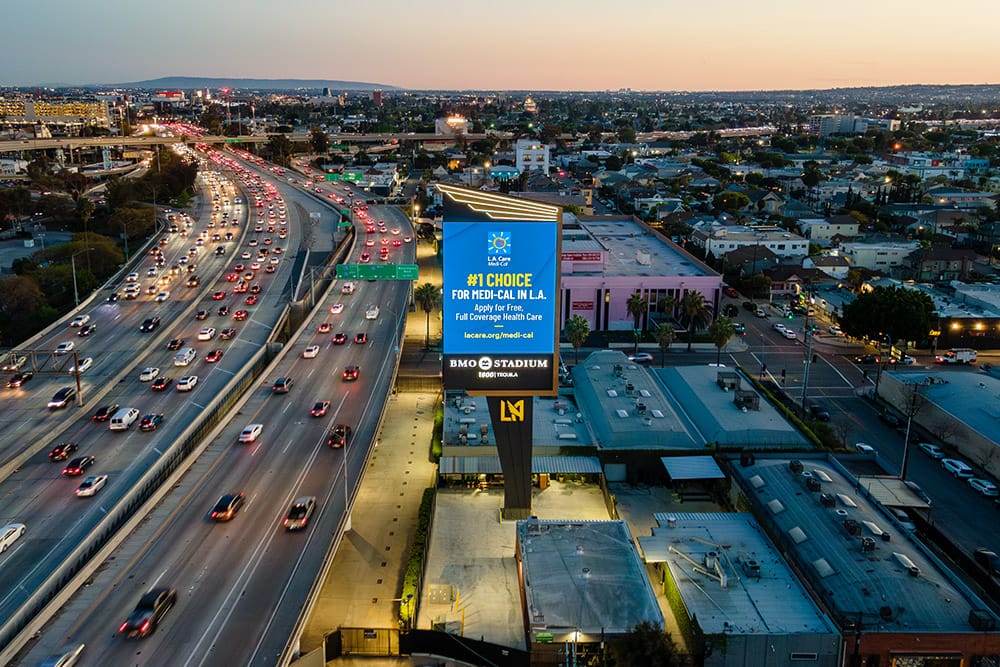


Businesses often plan commercial pylon signs for one reason: drivers must see the business before the entrance. However, height alone does not make a sign effective.
A successful project must balance roadside visibility, local regulations, structural requirements, lighting, maintenance, and installation. Before approving a drawing or comparing quotations, review these seven factors.

1. Start With the Road, Not the Sign
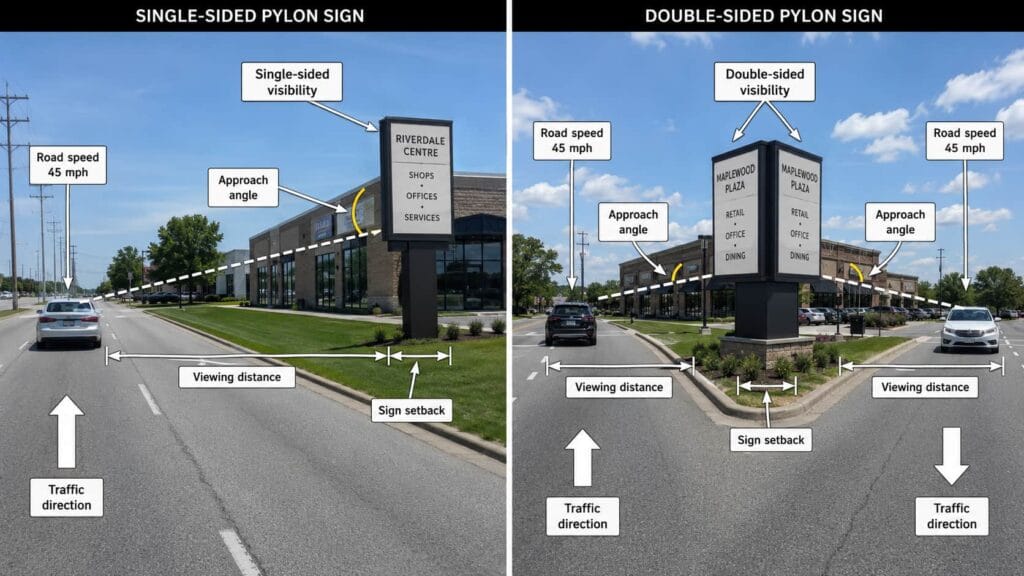
The first question is not, “How tall should the sign be?” It is, “From where must people see it?”
Review:
- Traffic direction and average road speed
- Distance between the road and the property
- Trees, buildings, and parked vehicles that may block the view
- Whether one or two sign faces are required
- The angle at which drivers approach the entrance
A front-view rendering cannot answer these questions. Site photos taken from both traffic directions are often more useful during the first design review.
For sites with lower height limits or shorter viewing distances, it may also be useful to compare a pylon sign vs monument sign before selecting the final structure.
2. Confirm Local Sign Rules Before Finalizing the Design
Commercial pylon signs may be restricted by local rules covering height, display area, setback, illumination, and digital content.
Check these requirements before you finalize the cabinet and steel structure. Otherwise, you may need to reduce, reposition, or completely redraw a finished design.
Larger signs may need structural calculations, foundation details, or drawings checked by a licensed engineer. The manufacturer can provide fabrication drawings, but final approval depends on local building and sign regulations.
3. Choose the Right Sign Configuration
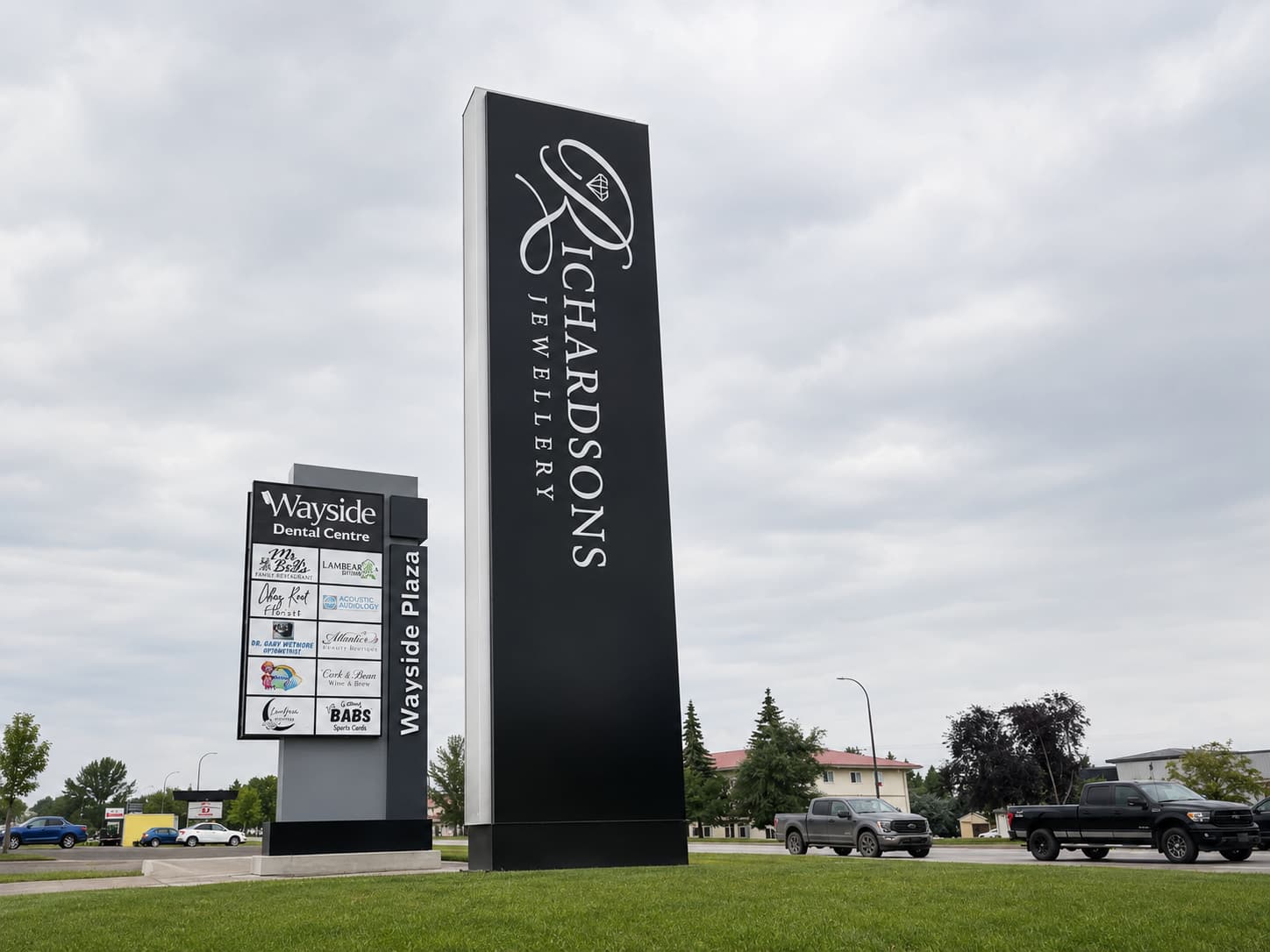
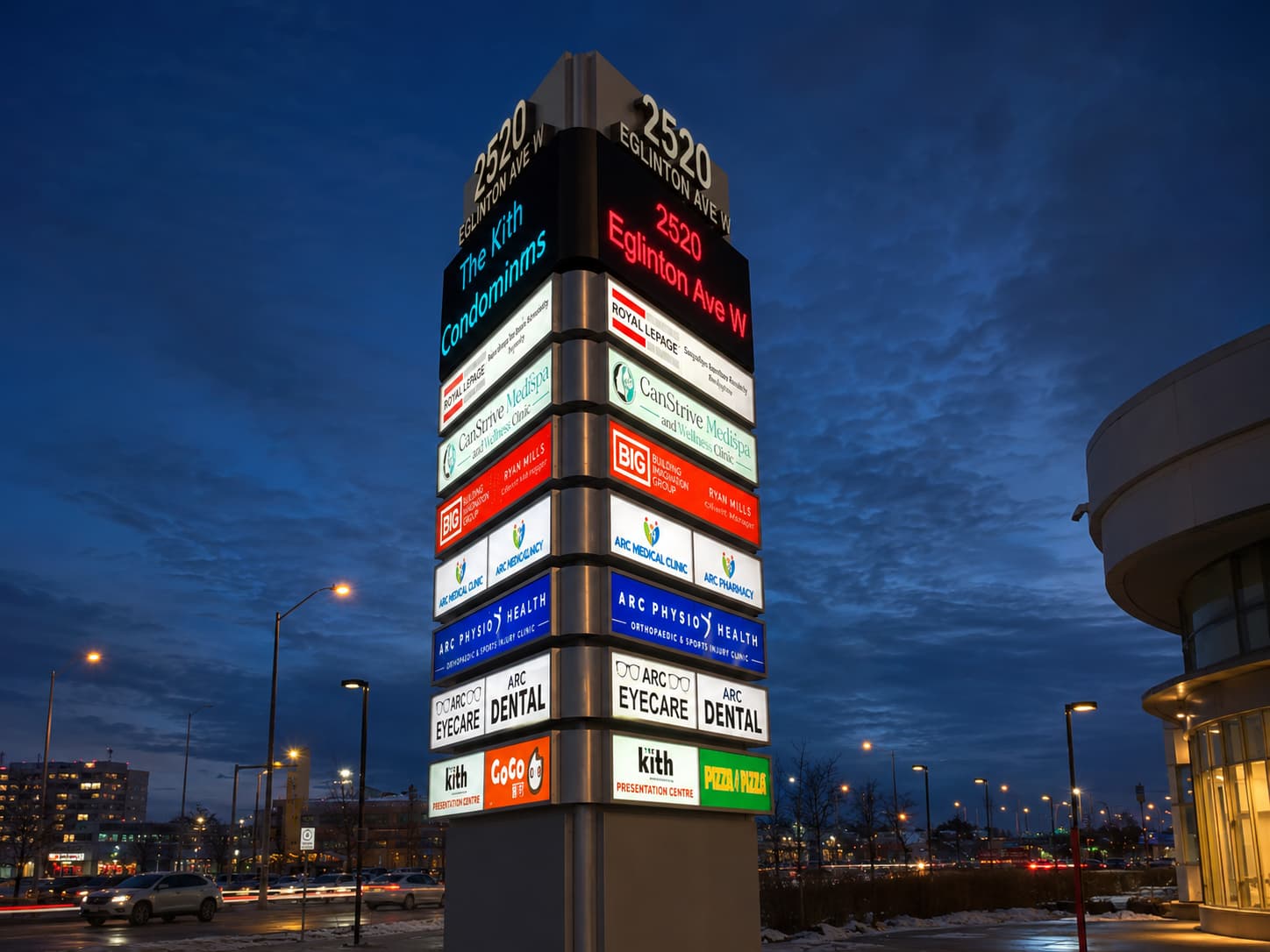
A single business may need one large illuminated logo panel. A shopping plaza may need a property header and several replaceable tenant panels. A gas station may combine branding with an LED fuel price display.
Decide early:
- Single-pole or double-pole support
- Single-tenant or multi-tenant layout
- Illuminated or non-illuminated cabinet
- Static panels or digital display
- Single-sided or double-sided visibility
Do not add more information simply because space is available. A crowded sign may look complete on a drawing but become difficult to read from moving traffic.
4. Match the Materials to the Sign Size and Environment
The sign structure, cabinet, and face material perform different jobs.
A typical system may use a steel support frame, an aluminum cabinet, and acrylic, polycarbonate, or flexible face material. The correct combination depends on panel size, wind exposure, impact risk, lighting method, transport, and future servicing.
Manufacturing details also matter. Weld quality, corrosion protection, sealed joints, cable entry points, and drainage openings affect long-term outdoor performance.
For illuminated signs, match cabinet depth and face diffusion to the LED layout. This helps prevent bright spots and dark areas.
5. Plan the Lighting as a Complete System
LED illumination is not only a matter of selecting bright modules. The supplier should review:
- Module spacing and viewing depth
- Power supply capacity and location
- Heat dissipation
- Day and night readability
- Wiring access
- Replacement of failed components
Digital message centers and fuel price displays require additional planning for controllers, communication methods, brightness adjustment, and ventilation.
Confirm the local voltage and control method before production, not after the sign reaches the site.
6. Review Installation, Maintenance, and Shipping
A pylon sign must be designed for the way it will be installed.
Foundation sizes, anchor bolts, base plates, lifting points, electrical entry, and crane access should match local contractor plans. Service doors must remain accessible after installation.
For international projects, large signs are often shipped in separate sections. This saves space in the container and makes on-site assembly easier. Clearly label each connection point and wire, and include simple assembly drawings.
Ask whether the sign will be factory assembled, illuminated, and inspected before packing.
7. Compare the Complete Project Scope
The lowest fabrication price may not represent the lowest project cost.
When comparing quotations, confirm whether they include:
- Sign cabinet and structural frame
- Sign faces and graphics
- LED modules, power supplies, and controllers
- Production drawings
- Pre-shipment lighting tests
- Export packing
- Spare parts
- Freight, permits, foundation, and local installation
Exclusions should be stated clearly. A professional quote helps the buyer, maker, and installer know where each person’s duties start and end.
Summary
The best commercial pylon sign is not always the tallest or most complex. You should find it easy to see, follow local rules, build it well, install it safely, and maintain it easily.
Before ordering, connect the visual design with the real site conditions. That step prevents more problems than changing colors or increasing the sign height later.
Frequently Asked Questions
How tall should a commercial pylon sign be?
There is no universal height. Base it on local sign codes, viewing distance, traffic speed, property setback, and surrounding obstructions.
Which materials do people commonly use?
Many projects use a steel support structure, an aluminum cabinet, and acrylic, polycarbonate, or flex-face panels. Material selection should match the sign size, lighting system, transport requirements, and outdoor environment.
Who handles the foundation and installation?
For international orders, the manufacturer commonly supplies the fabricated sign, production drawings, and packing support. A local contractor usually handles permits, foundation work, lifting, electrical connection, and final installation.
What information do you need for a quotation?
For a quote, send us the site location, road-facing photos, estimated size, logo files, number of sign faces, lighting requirements, local voltage, and installation country. Please also include any available drawings or local sign restrictions.
Request a Commercial Pylon Sign Review
Planning a new pylon sign or replacing an existing structure?
Send your site photos, logo, approximate dimensions, and installation location. Grandview can review the cabinet layout, materials, lighting, fabrication, and modular shipping requirements before preparing a quotation.
References and Industry Resources
The following resources were used to support the information on sign regulations, structural design, electrical standards, and installation safety in this article.
- International Sign Association — Sign Lighting and Local Regulations
Guidance on how local sign ordinances may affect sign height, size, setback, cabinet design, and illumination. - International Code Council — 2024 IBC Appendix H: Signs
Code provisions covering the construction and structural requirements of outdoor signs. - ASCE/SEI 7-22 — Minimum Design Loads and Associated Criteria
A structural design reference covering wind, snow, seismic, rain, and other design loads. - UL Solutions — Electric Sign Certification and Sign Component Solutions
Information about standards and certification requirements for electric signs, LED sign components, and retrofit systems. - OSHA — Cranes and Derricks in Construction
Safety information for crane operations, lifting work, construction sites, and related installation risks.