

B2B Commercial Signage Guide
A monument sign may look straightforward in a rendering, but road position, landscaping, tenant information, nighttime operation and maintenance access can all change the final solution.
Core Design Principle
The logo sets the visual direction; the site determines how the sign must work.
Start With These Inputs
- Logo or artwork
- Overall dimensions
- Site photographs
- Day/night effect
01 · Quick Preview
Four Decisions That Shape the Project
01 · SITE
Start with the location, viewing conditions and local restrictions.
02 · FORMAT
Choose single- or multi-tenant construction according to future panel needs.
03 · SYSTEM
Review structure, cabinet, face, lighting, sealing and access together.
04 · DELIVERY
Plan modular packing and assembly when sourcing the sign internationally.
02 · Commercial Role
Why Commercial Properties Use Monument Signs
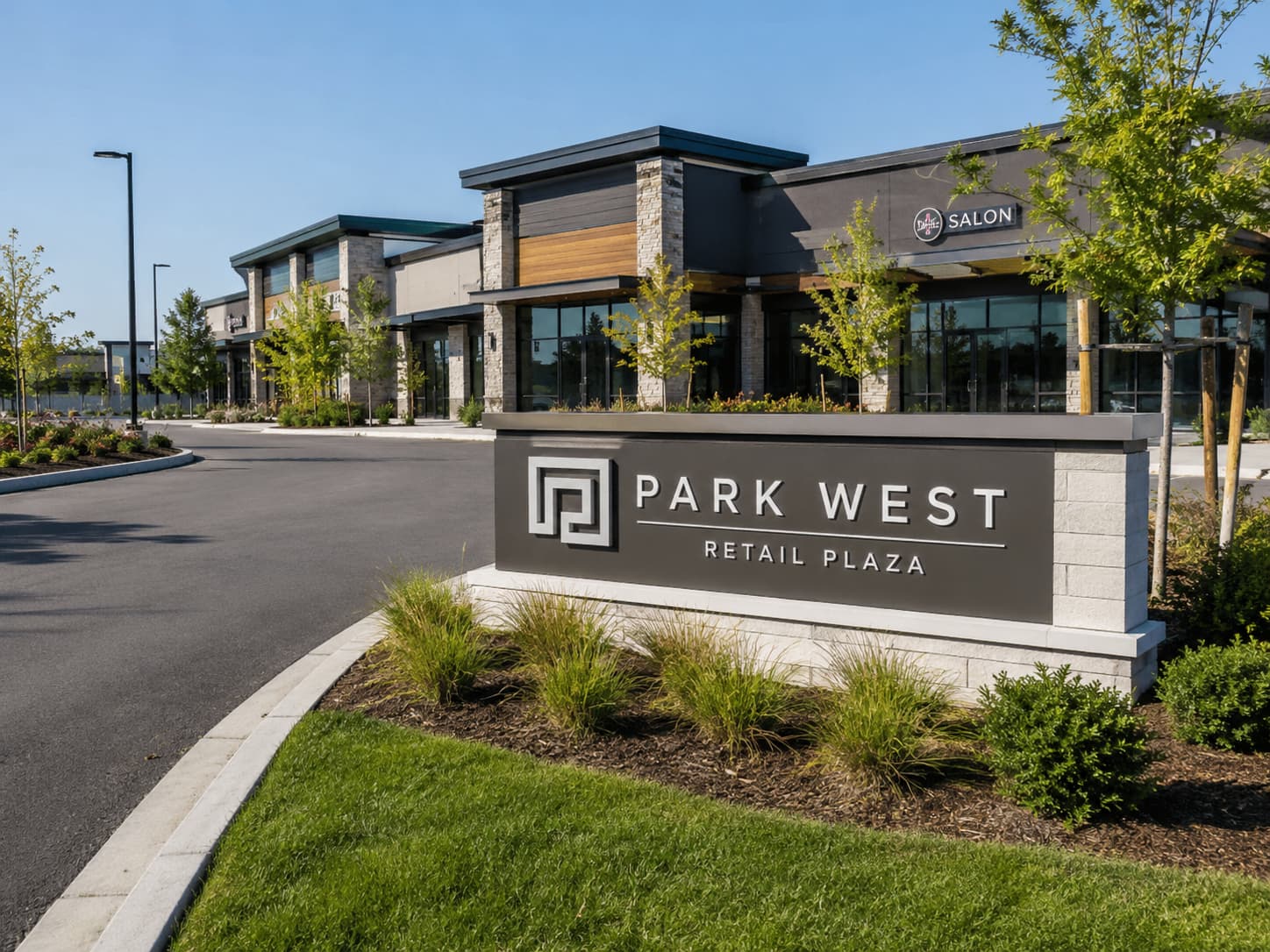
Monument signs are low-profile, freestanding signs normally positioned near a driveway, entrance or landscaped frontage. Unlike a tall roadside pylon, they are intended to connect with the architecture and arrival experience.
Retail plazas, office parks, hotels, medical facilities and residential communities use them to identify a brand, display tenants or support wayfinding. However, an attractive sign can still underperform if landscaping hides it, the approach angle reduces legibility or the lighting is unsuitable.
Buyer Perspective
Architectural appearance is only one part of performance.
Visibility, tenant changes, nighttime operation and future service should be evaluated before approval.
03 · Site-to-Spec Review
Start the Monument Sign Design With the Site
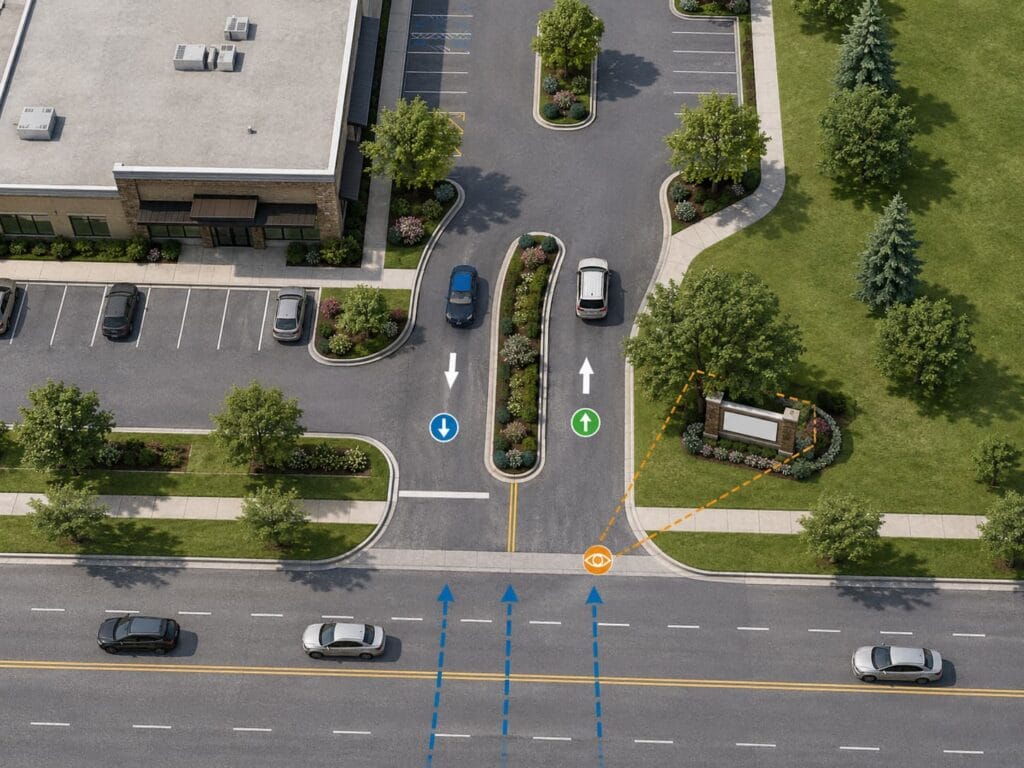
Before selecting materials or lighting, document how people will encounter the sign. A front elevation cannot show traffic direction, viewing angle, competing signs or future plant growth.
01 · Photos from each approach direction
02 · Distance and viewing conditions
03 · Buildings, walls and landscaping
04 · Available electrical supply
05 · Daytime and nighttime requirements
06 · Local height, area and lighting limits
Dimensions, foundations and structural details are project-specific and may require confirmation by local authorities or engineers.
Pro Tip: Take site photos from the position of an approaching driver, not only from directly in front of the proposed sign. This gives the designer more useful information about real viewing angles and possible obstructions.
04 · Application Planning
Match the Sign Format to the Commercial Application
Different properties place different demands on a monument sign.
| Commercial application | Main purpose | Key design priorities |
|---|---|---|
| Single-brand business | Establish a strong entrance identity | Logo hierarchy, architectural finish, day/night recognition |
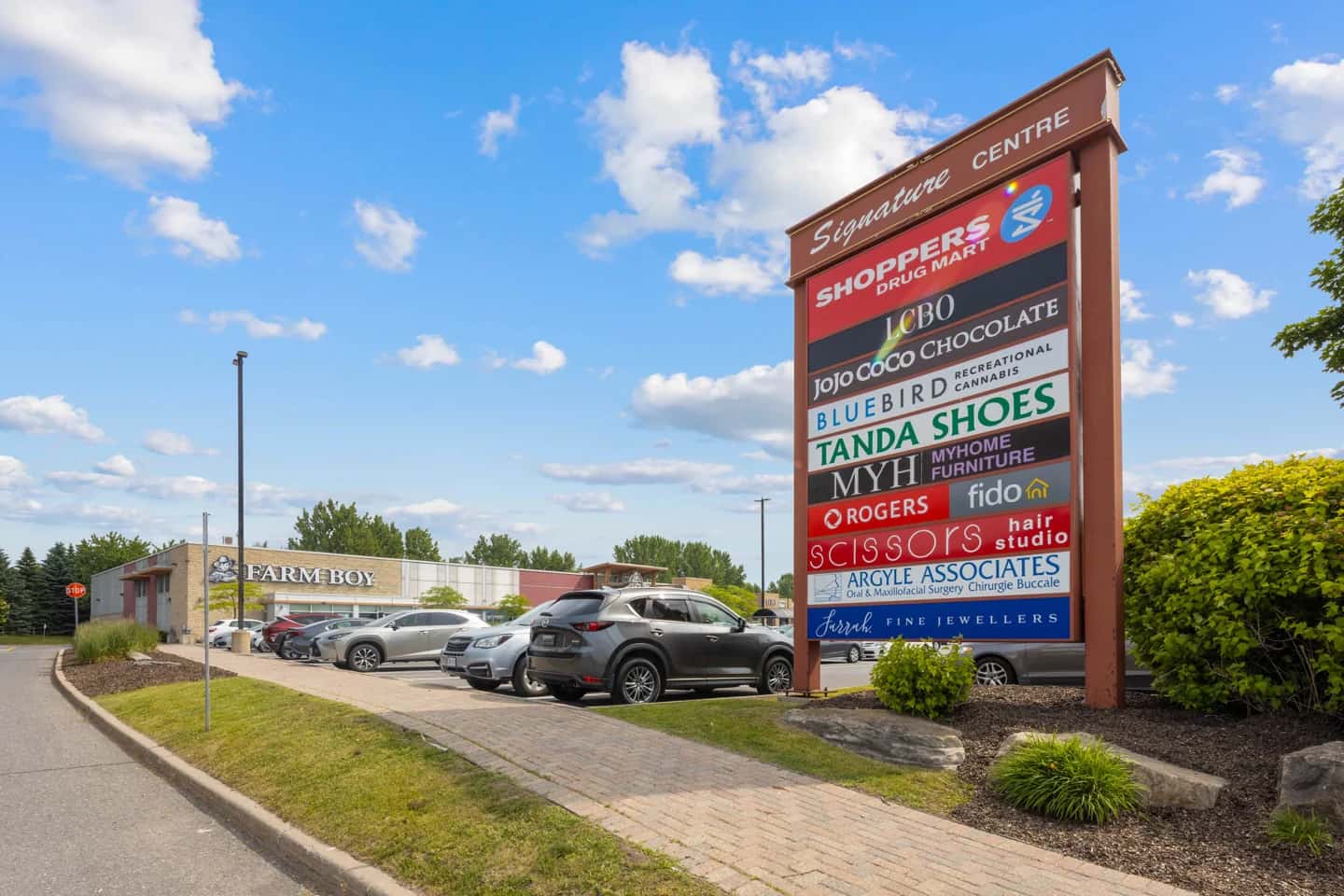
| Retail plaza | Identify several tenants | Replaceable panels, readable spacing, tenant hierarchy |
| Hotel or resort | Support arrival and brand presentation | Refined finishes, illumination, compatibility with landscaping |
| Office or medical campus | Identification and wayfinding | Clear naming, directional information, consistent sign family |
| Residential community | Mark the main entrance | Architectural integration, durable finishes, controlled lighting |
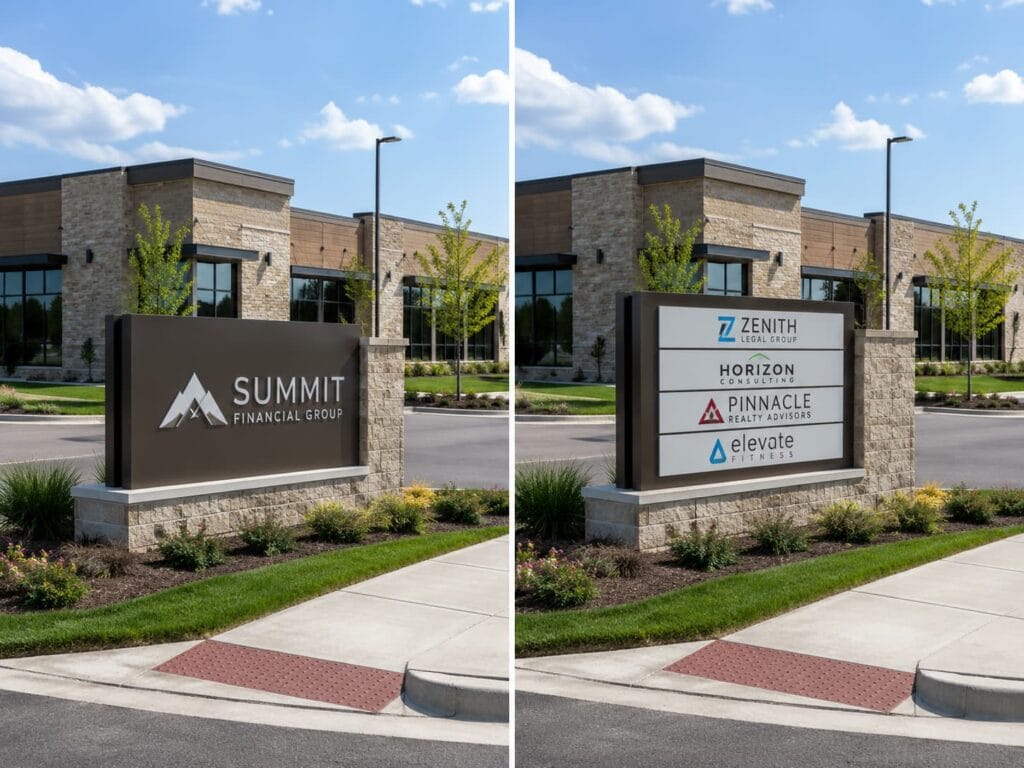
Brand-Led Format
Single-Tenant Monument Signs
A single-tenant sign gives one brand greater freedom in shape, lettering, color and illumination.
Change-Ready Format
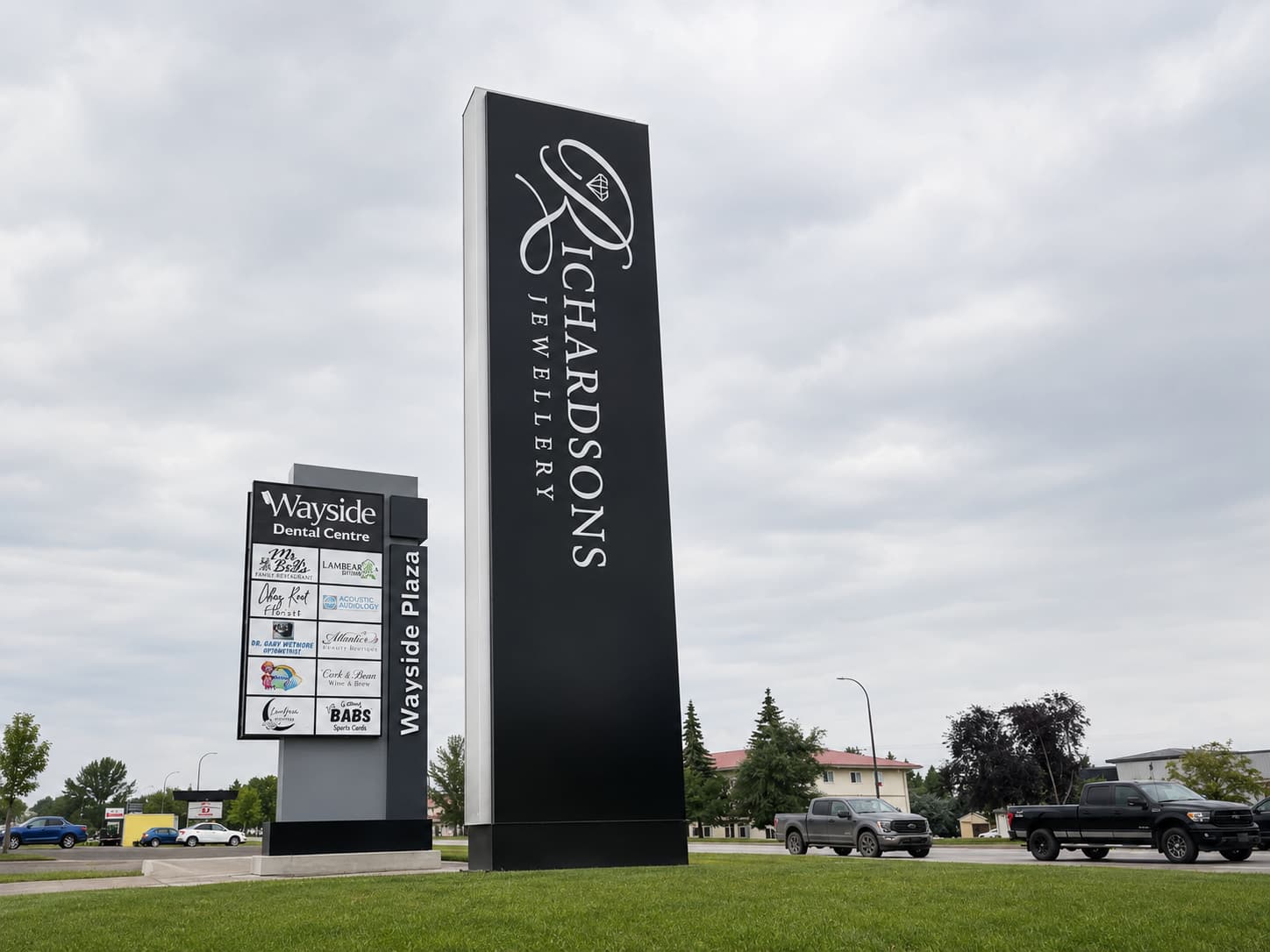
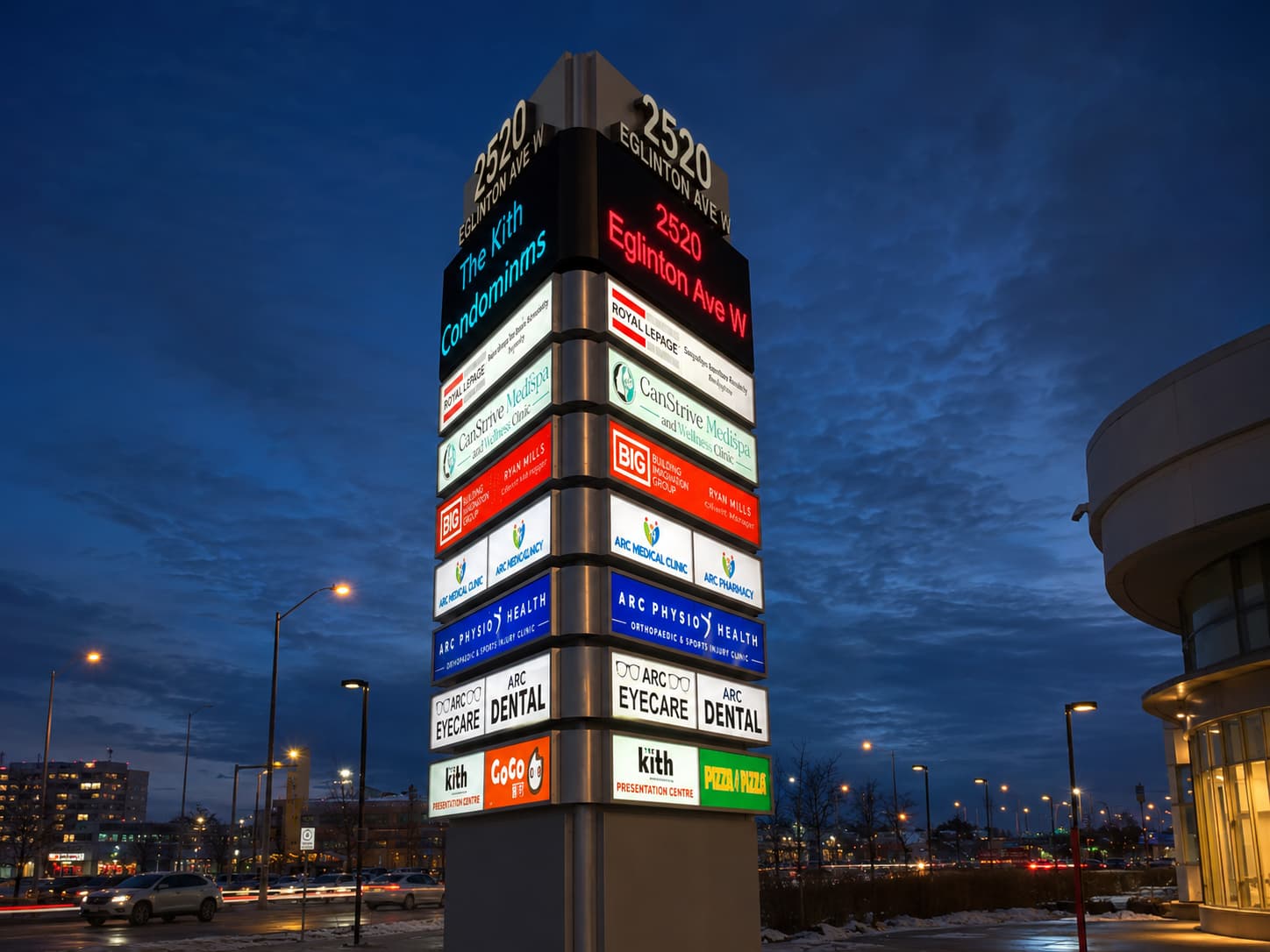
Multi-Tenant Monument Signs
Replaceable panels, fasteners, wiring and access should be planned before fabrication to reduce future service work.
Decision Rule: If one identity must dominate, use a single-tenant layout. If occupants may change, specify replaceable tenant panels and access details from the start.
05 · Material System
Compare Monument Sign Materials by Function
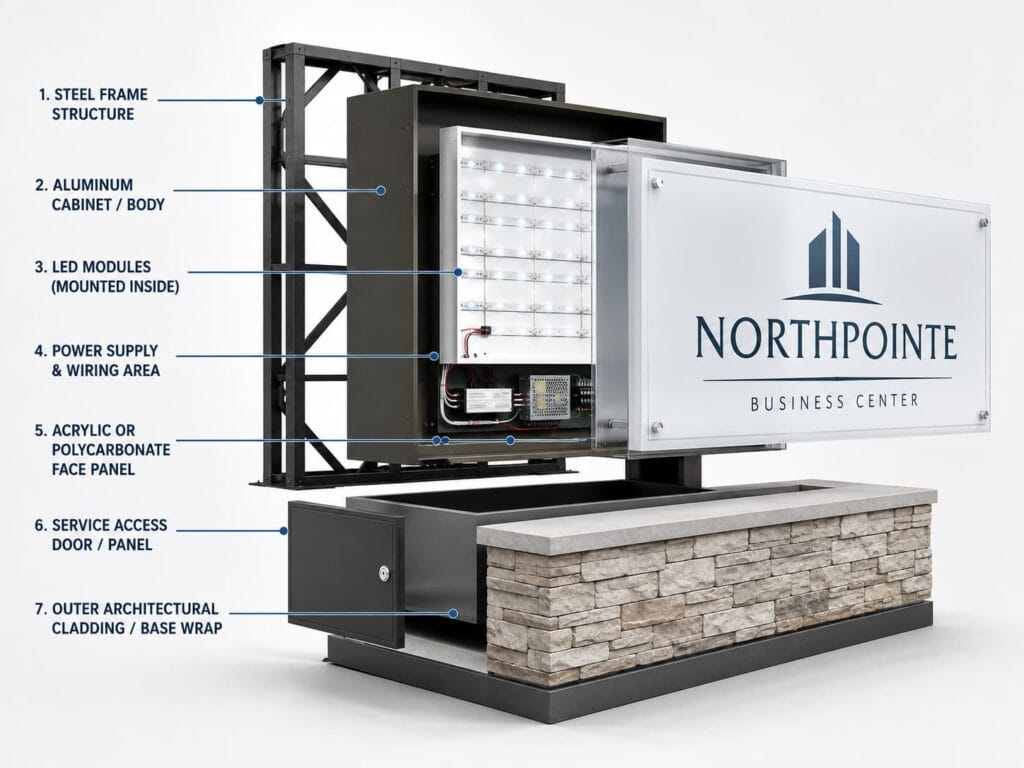
A commercial monument sign combines components that perform different jobs. Buyers should evaluate the complete system rather than selecting one material for the entire structure.
| Component | Common option | Why it is used | Buyer checks |
|---|---|---|---|
| Internal support | Steel structure | Supports the cabinet and connections | Steel specification, coating and local engineering |
| Exterior cabinet | Aluminum cabinet | Forms a durable, lightweight enclosure | Seams, finish and service access |
| Illuminated face | Acrylic sign face | Provides graphic appearance and light transmission | Thickness, color, retention and shipping protection |
| Impact-resistant face | Polycarbonate sign face | Suits projects needing greater impact resistance | UV suitability, expansion and optical appearance |
| Lighting system | LED modules and power supplies | Provides internal illumination | Voltage, spacing, heat and replacement access |
| Architectural surround | Masonry, stone, stucco or cladding | Connects the sign with the property | Factory-made or locally constructed |
Selection should consider climate, size, appearance, shipping and maintenance—not only initial cost. The correct sign face depends on dimensions, cabinet design and site exposure.
06 · Day/Night Performance
Plan Lighting for the Installed Result
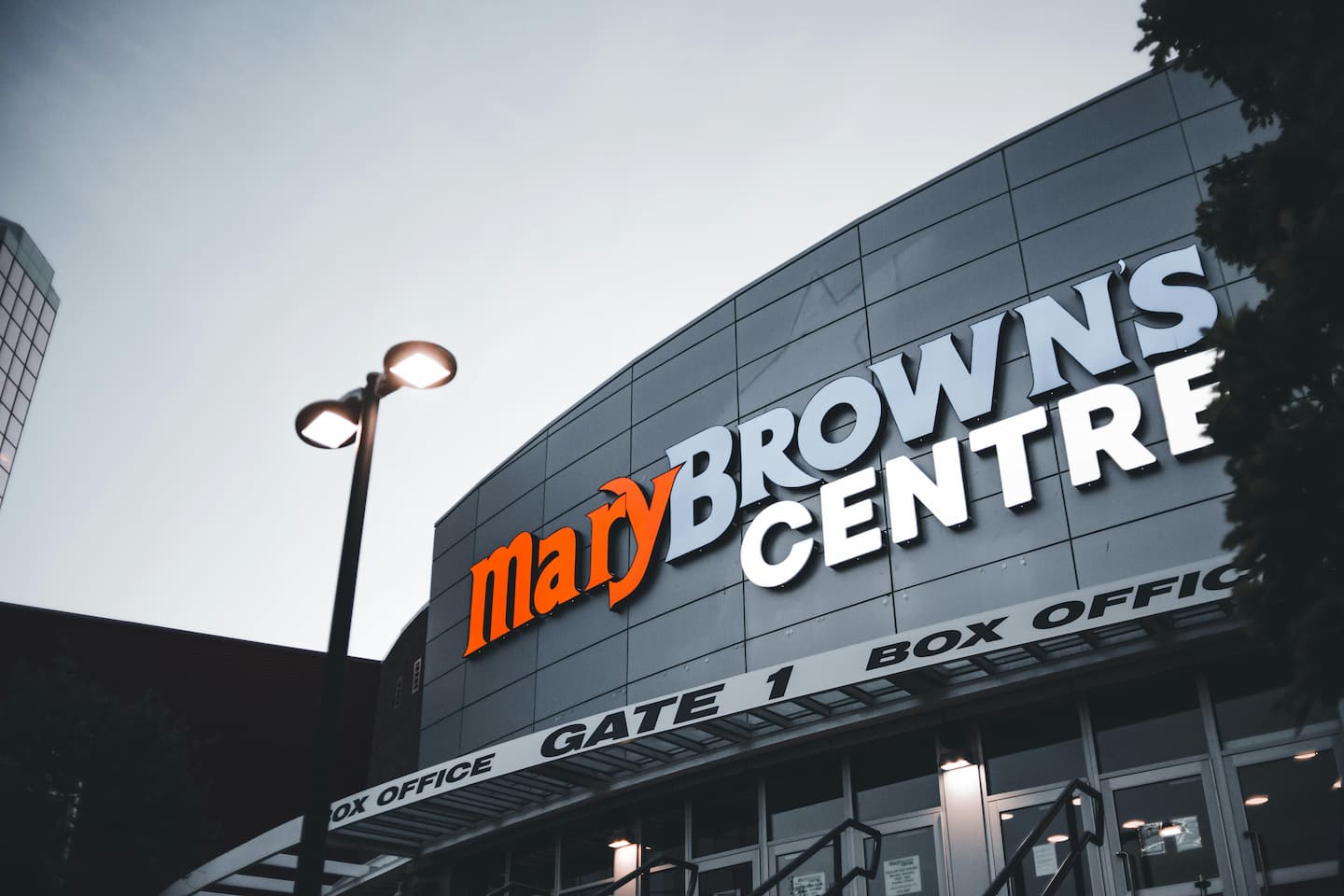
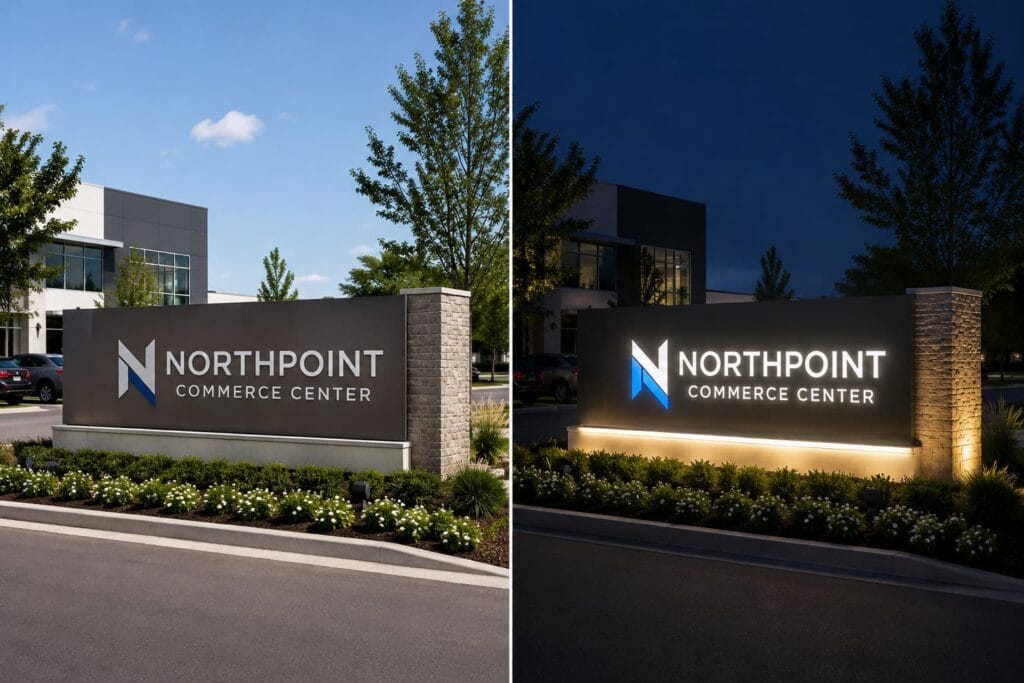
Illuminated monument signs must work in daylight and darkness. Options include internally illuminated cabinets, push-through letters, halo-lit elements and external lighting. The appropriate method depends on appearance, local rules, power and service conditions.
Internally Illuminated Cabinet
Push-Through Letters
Halo-Lit Elements
External Architectural Lighting
LED modules must be coordinated with cabinet depth, face material and internal reflection. Poor coordination may create bright spots, dark edges or uneven logos. A rendering communicates intent but does not replace a factory lighting check.
Important Note: Confirm the project voltage and electrical responsibility before production. Components, wiring arrangements and final field connections may need to meet destination-specific requirements.
Project Review
Planning an Illuminated Monument Sign?
Send the intended daytime and nighttime effects, overall size and installation location for a lighting and fabrication review.
07 · Long-Term Performance
Structure, Sealing and Maintenance Matter After Installation
Long-term performance often depends on details behind the face. Structure and connections must suit the sign and local requirements. Weatherproof sealing should protect openings while allowing appropriate drainage. Service panels should provide access to LEDs, power supplies and tenant graphics.
| Common problem | Possible cause | Planning response |
|---|---|---|
| Uneven illumination | Module layout, cabinet depth or face diffusion is unsuitable | Review the complete lighting system and perform a pre-shipment lighting check |
| Water inside the cabinet | Open seams, cable entry points or poor drainage | Define sealing, protected wiring entries and drainage details |
| Difficult maintenance | No practical service opening | Include removable faces, rear access or service panels in the drawings |
| Early finish deterioration | Finish not selected for the exposure | Confirm outdoor coating and color requirements with the fabricator |
| Installation delays | Connections or assembly sequence are unclear | Coordinate shop drawings, part markings and local site preparation |
08 · Project Execution
From Design Approval to Custom Sign Fabrication
For an international project, responsibilities must be clear. A custom signage manufacturer can review manufacturability, fabricate components, integrate sign faces and LEDs, check assembly and prepare delivery. Local professionals normally confirm permits, foundations, structural requirements, field wiring and installation.
Factory Fabrication Scope
- Manufacturability and drawing review
- Steel and aluminum fabrication
- Sign face and LED integration
- Assembly and lighting checks
- Modular packing preparation
Local Project Scope
- Permits and code confirmation
- Foundation requirements
- Field electrical connections
- Site preparation and installation
- Local inspection coordination
Practical Factory Workflow
01 · INPUT
Project Input Review
Review logo, dimensions, rendering and site information.
02 · SYSTEM
System Confirmation
Confirm construction, materials, lighting and access.
03 · DRAWING
Drawing Review
Review production drawings and modular divisions.
04 · BUILD
Custom Fabrication
Complete metalwork, finishing and LED integration.
05 · CHECK
Pre-Shipment Check
Check dimensions, wiring, appearance and illumination.
06 · PACK
Protected Delivery
Protect, identify and pack the components.
Large outdoor monument signs may be manufactured in sections. Plan division points around appearance, connections, transport limits and local assembly before production.
From Rendering to Production
Need a Manufacturable Monument Sign Plan?
Share your drawing, overall dimensions, material preferences and delivery destination for a project review.
09 · Buyer Checklist
What to Prepare Before Requesting a Quote
Every engineering detail need not be final, but the following inputs make the first factory review and quotation more useful.
✓ Logo or Vector Artwork
Defines shape, color and graphics.
✓ Overall Dimensions
Defines cabinet, face and shipping scope.
✓ Site & Approach Photos
Shows visibility and installation context.
✓ Reference or Rendering
Communicates style and lighting intent.
✓ Tenant Layout
Determines panels and future access.
✓ Day/Night Requirements
Guides faces, letters and LEDs.
✓ Available Drawings
Identifies structure and assembly needs.
✓ Quantity & Destination
Affects production and packaging.
✓ Voltage & Installation Plan
Supports electrical coordination.
10 · Buyer FAQ
Frequently Asked Questions
What is the best material for a monument sign?
There is no universal best material. The combination should reflect the design, environment, maintenance plan and local requirements.
Should a monument sign be illuminated?
Illumination helps properties that require nighttime identification. Choose internal, letter, halo or external lighting according to the effect and site restrictions.
Can tenant panels be replaced later?
Yes, if panels, access and wiring are designed for replacement from the beginning.
Can a monument sign be shipped in sections?
Yes. Review division points, connections, markings, packaging and the assembly sequence before production.
Who is responsible for the foundation and installation?
For overseas supply, local professionals usually confirm foundations, permits, field electrical work and installation. The factory supplies fabricated components and production details.
What should I send for an initial quotation?
Send the logo, dimensions, site photos, references or drawings, lighting requirements, quantity, destination and known local restrictions.
Final Project Step
Turn Site Information Into a Factory-Ready Monument Sign
Effective monument sign design connects brand appearance with real project conditions. Visibility, materials, lighting, structure, access and transportation should be reviewed together.
Grandview Sign Factory supports international sign companies, brand owners, designers and contractors with custom monument sign fabrication. Submit your logo, dimensions, site photos, drawings, quantity and delivery destination for a project-specific review.
Related guidance: Pylon Sign vs. Monument Sign · Custom Monument Signs
References and Further Reading
These standards, research resources, and manufacturer technical documents support further review of on-premise sign visibility, structural loading, electric-sign safety, enclosure protection, and illuminated sign-face materials. They are provided for technical context rather than as universal project specifications.
Sign Research Foundation — On-Premise Signage: Situations, Legibility & Visibility
Useful for reviewing how letter size, contrast, placement, sign height, viewing conditions, and roadside context affect the visibility and legibility of on-premise signs. View source
American Society of Civil Engineers — ASCE/SEI 7-22
Provides general context for design loads such as wind, snow, rain, seismic effects, and load combinations. The applicable edition and structural design requirements depend on the project location and locally adopted code. View source
UL Standards & Engagement — UL 48, Electric Signs
Relevant to product-safety requirements for electrically operated or illuminated signs, including LED signs, in markets where UL 48 applies. Buyers should confirm destination-specific certification, components, voltage, wiring, and field-connection requirements before production. View source
International Electrotechnical Commission — IEC 60529 and IP Ratings
Explains how IP codes classify an electrical enclosure’s protection against solids and liquids. An IP rating applies to the evaluated enclosure or assembly; it should not be inferred from a sealant, component, or material alone. View source
ACRYLITE® — LED Sign Grade Technical Information
Manufacturer technical information for sign-grade acrylic, including physical properties, outdoor exposure considerations, thermal expansion, light transmission, machining, forming, and handling. Values apply to the specified product grade rather than to every acrylic sheet. View source
Plaskolite — TUFFAK® Polycarbonate Sheet Fabrication Guide
Useful for reviewing polycarbonate fabrication considerations for flat and formed sign faces, including cutting, drilling, forming, fastening, thermal movement, finishing, and handling. View source
Note: Monument sign requirements vary by jurisdiction, site exposure, foundation conditions, sign dimensions, materials, electrical system, illumination method, and installation environment. Buyers should confirm permits, setbacks, structural calculations, electrical compliance, and field installation details with the local authority, licensed engineer, electrician, installer, and project team before production.