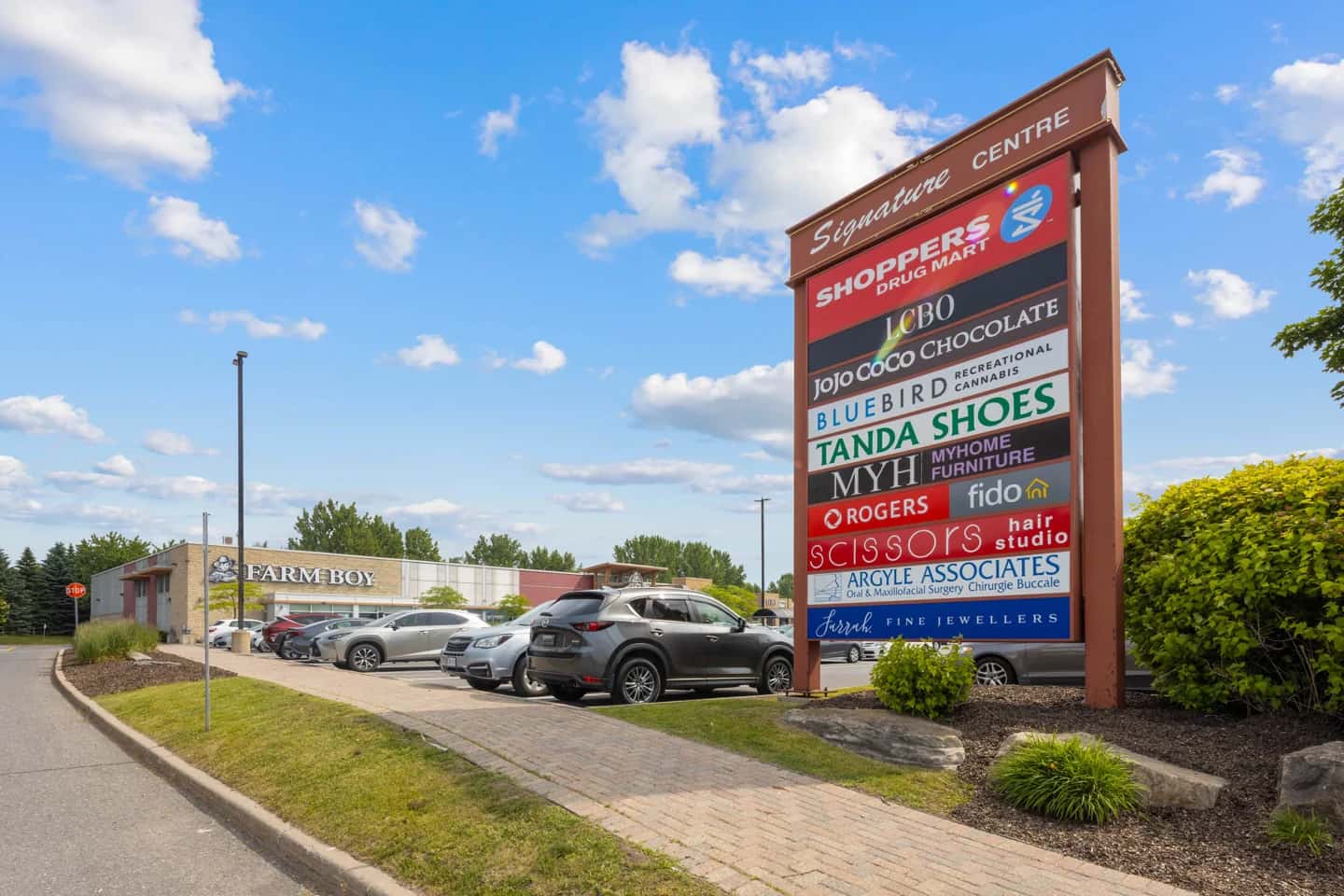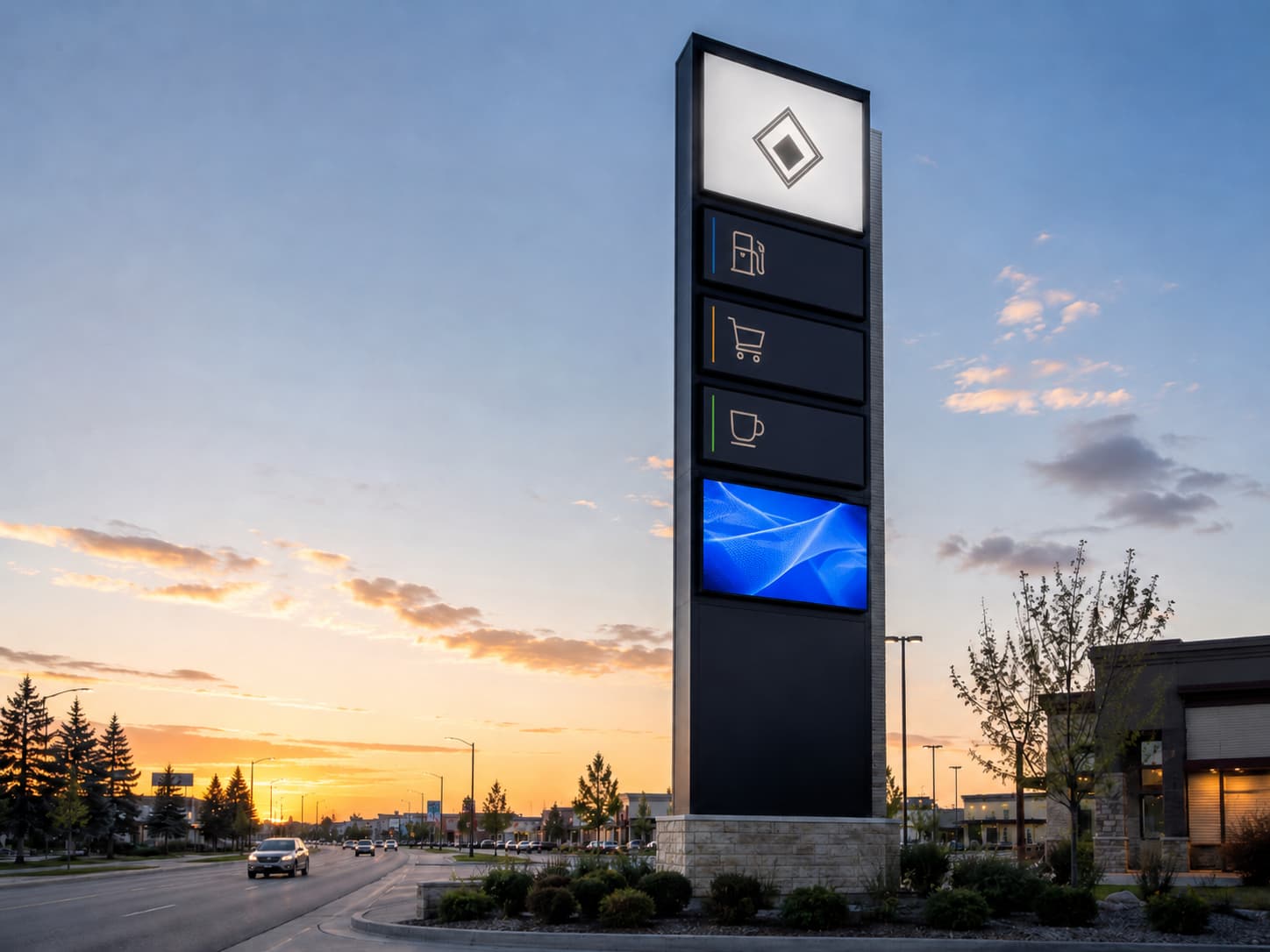


Outdoor wayfinding signage helps people move through commercial spaces with less confusion. For retail plazas, hotels, business parks, hospitals, campuses, gas stations, parking areas, and roadside properties, the right signs help visitors identify entrances, find tenants, follow directions, and recognize a brand before they reach the building.

For B2B buyers, outdoor wayfinding signs are not only design elements. They are part of a practical signage system. A project may need pylon signs for long-distance visibility, monument signs for entrance identification, post and panel signs for flexible directional information, directory signs for tenant guidance, and smaller directional signs for parking or pedestrian routes.
A good outdoor wayfinding signage plan should consider visibility, sign placement, material selection, lighting, weather resistance, structure, sign face material, and maintenance access. It should also support consistent branding across multiple sign types.
This guide explains how to evaluate outdoor wayfinding signs from a commercial project and fabrication perspective. It is written for sign companies, brand owners, developers, contractors, design firms, commercial property owners, and B2B buyers looking for a custom signage manufacturer or sign fabrication partner.
What This Article Covers
This guide explains how B2B buyers can plan outdoor wayfinding signage for commercial properties, including sign types, visitor flow, materials, lighting, fabrication details, and what to prepare before requesting a custom quote.
Visitor Guidance
Understand how outdoor wayfinding signage helps visitors find entrances, tenants, parking areas, and service points.
Sign Type Options
Compare pylon signs, monument signs, post and panel signs, directory signs, and directional signs.
Materials & Lighting
Learn how materials, lighting, sign faces, steel structure, aluminum cabinets, and sealing affect outdoor performance.
Planning Mistakes
Review common planning mistakes that can reduce readability, weaken branding, or increase maintenance problems.
Quote Preparation
See what buyers should prepare before requesting a custom outdoor wayfinding sign quote.
What Is Outdoor Wayfinding Signage?
Outdoor wayfinding signage is a system of signs used to guide people through exterior spaces. It helps drivers and pedestrians understand where to go, where to park, where to enter, and how to find a specific building, tenant, department, or service point.
Unlike a single storefront sign, a wayfinding system usually includes multiple sign types working together. For example, a retail plaza may use a pylon sign near the road, a monument sign at the entrance, a directory sign near the parking area, and directional signs near internal roads or walkways.
Outdoor wayfinding signs may be illuminated or non-illuminated. They may use aluminum cabinets, steel structures, acrylic sign faces, polycarbonate sign faces, LED modules, printed panels, replaceable tenant inserts, or other project-specific materials. The right choice depends on the application, environment, viewing distance, and maintenance needs.
Why Commercial Properties Need Clear Outdoor Wayfinding
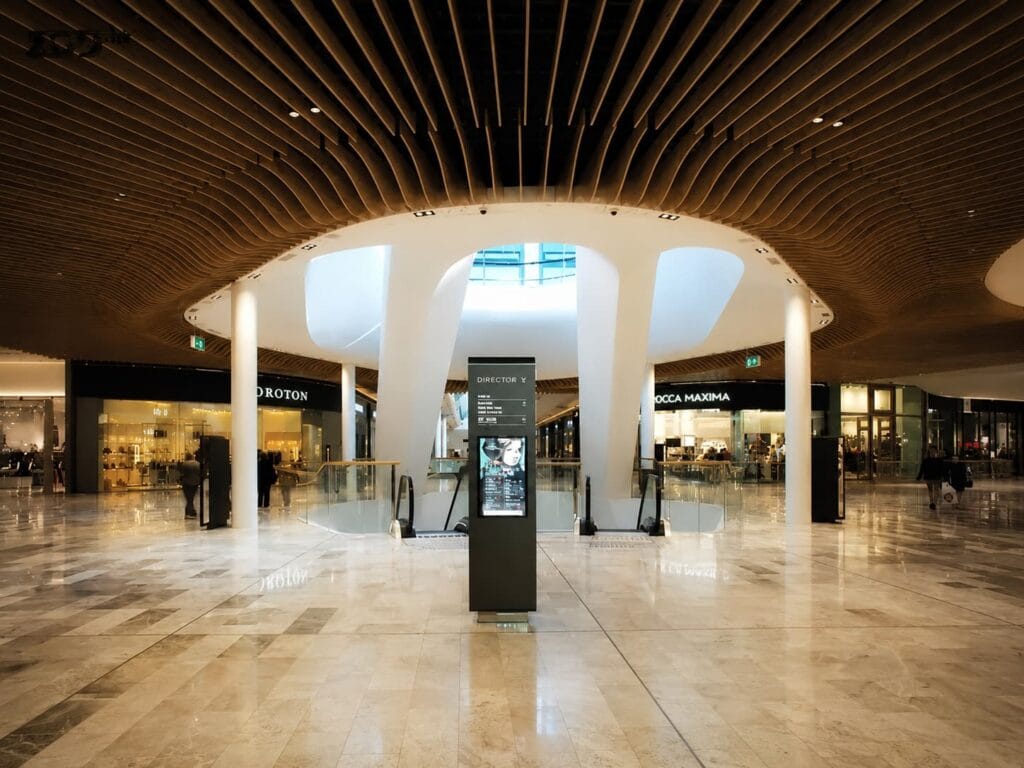
Commercial properties often include multiple traffic paths, entrances, parking areas, tenants, and service zones. Without clear signage, visitors may miss the entrance, drive past the site, park in the wrong area, or struggle to find a specific business.
For retail plazas and shopping centers, outdoor wayfinding signage helps organize tenant information and guide customers from the road to the correct storefront.
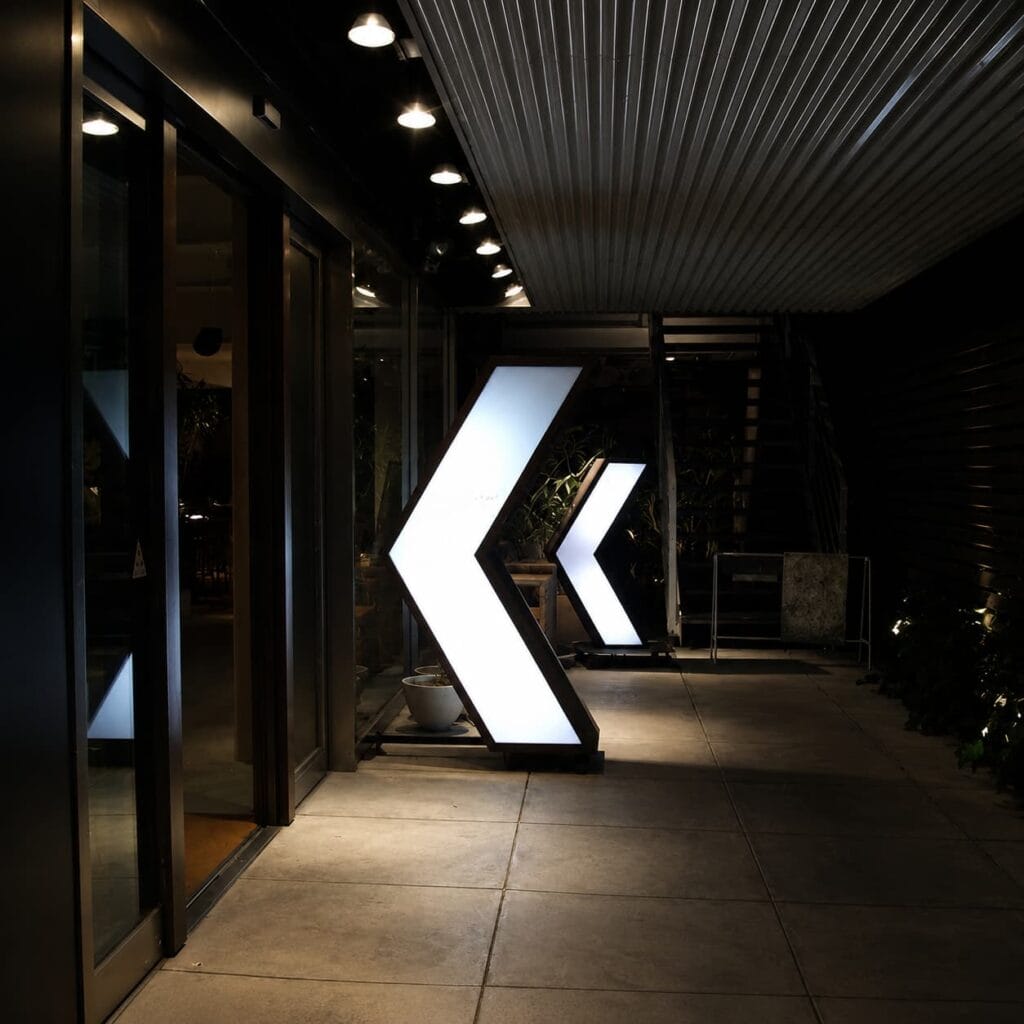
Clear signage also supports brand consistency. When pylon signs, directory signs, monument signs, and directional signs use consistent colors, materials, typography, and lighting, the whole property feels more organized.
Main Types of Outdoor Wayfinding Signs
Different signs serve different roles in a wayfinding system. A strong outdoor signage plan usually combines several types rather than relying on one sign.
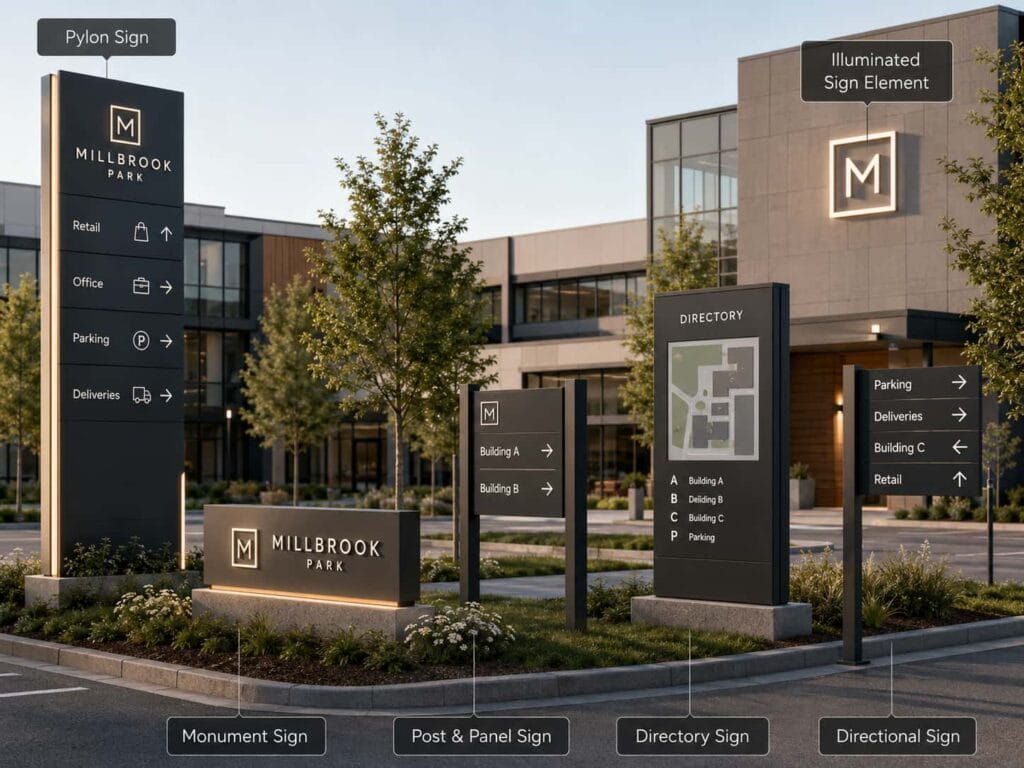
| Sign Type | Best For | Main Benefit | Custom Considerations |
|---|---|---|---|
| Pylon Signs | Roadsides, gas stations, retail plazas | Long-distance visibility | Height, steel structure, LED lighting, sign face material |
| Monument Signs | Entrances, business parks, hotels | Ground-level brand presence | Base design, finish, lighting, architectural style |
| Post & Panel Signs | Campuses, parks, commercial sites | Flexible directional information | Panel size, post material, replaceable graphics |
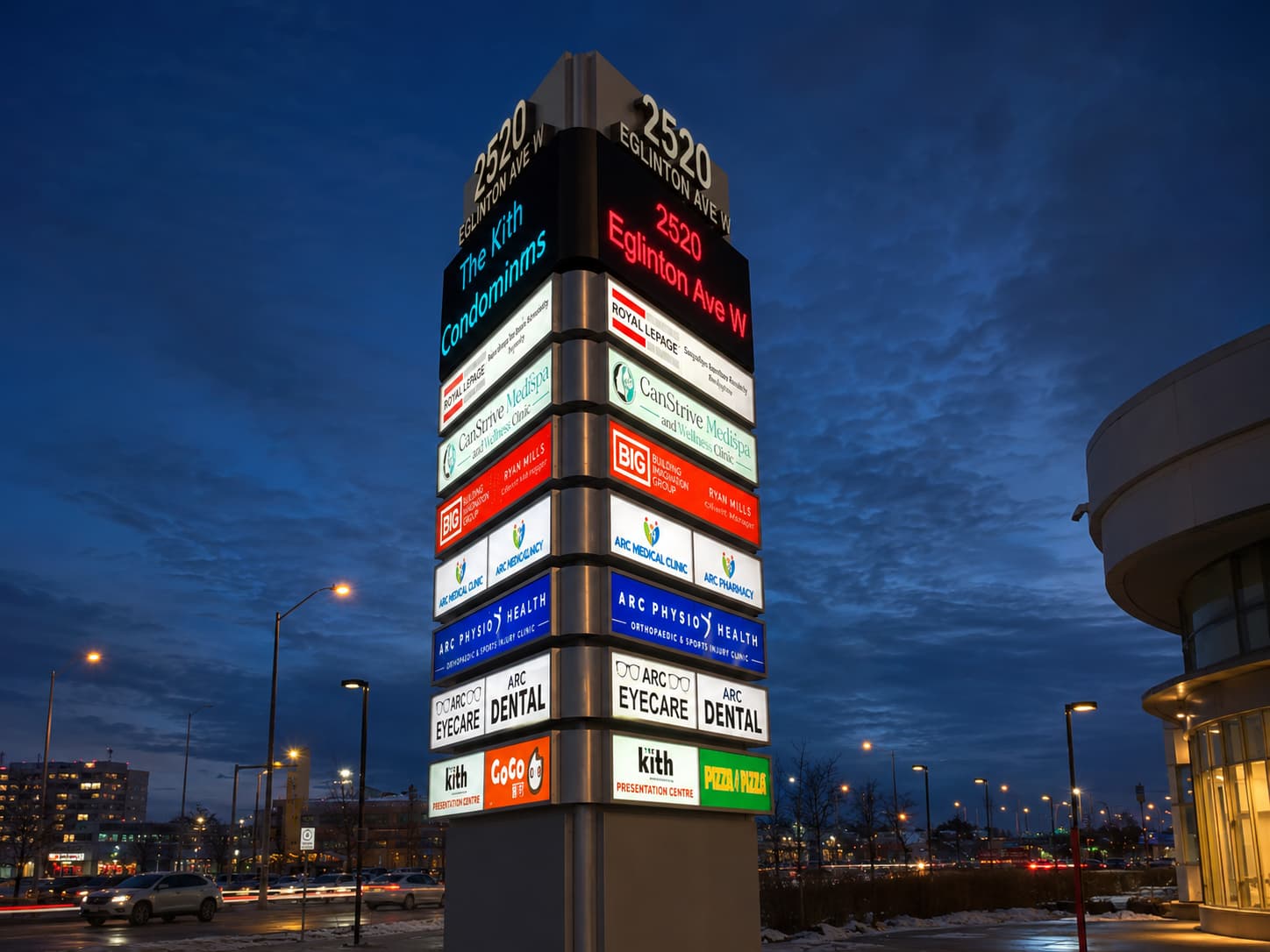
| Directory Signs | Multi-tenant properties, plazas, lobbies | Tenant or building information | Layout hierarchy, changeable inserts, readability |
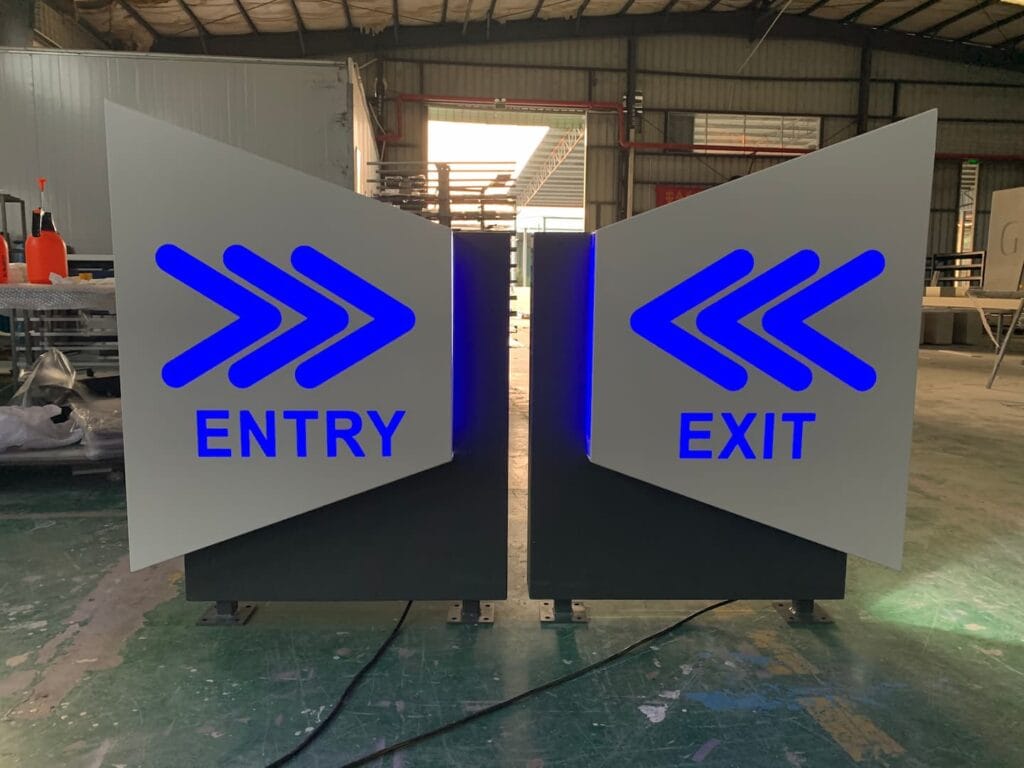
| Directional Signs | Parking areas, driveways, pedestrian paths | Movement guidance | Arrow layout, viewing angle, installation position |
| Illuminated Signs | Nighttime commercial visibility | Better readability after dark | LED layout, sign face material, sealing, maintenance access |
Pylon Signs

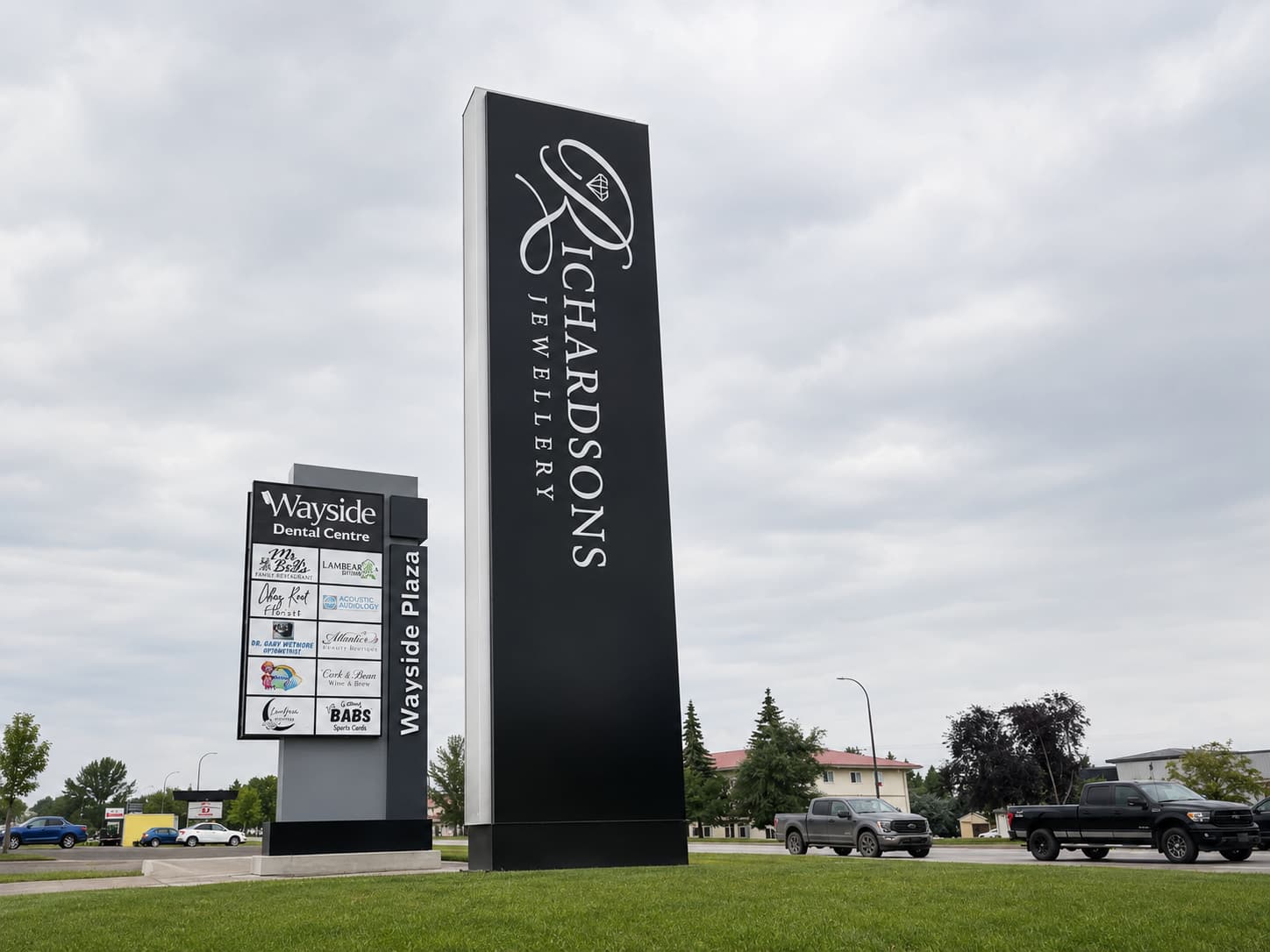
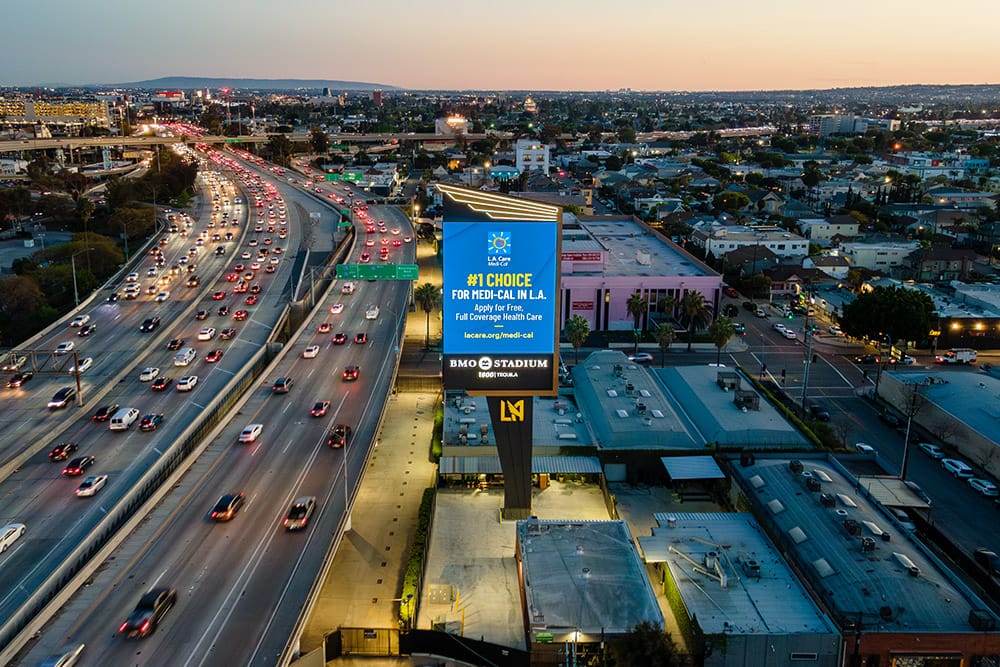
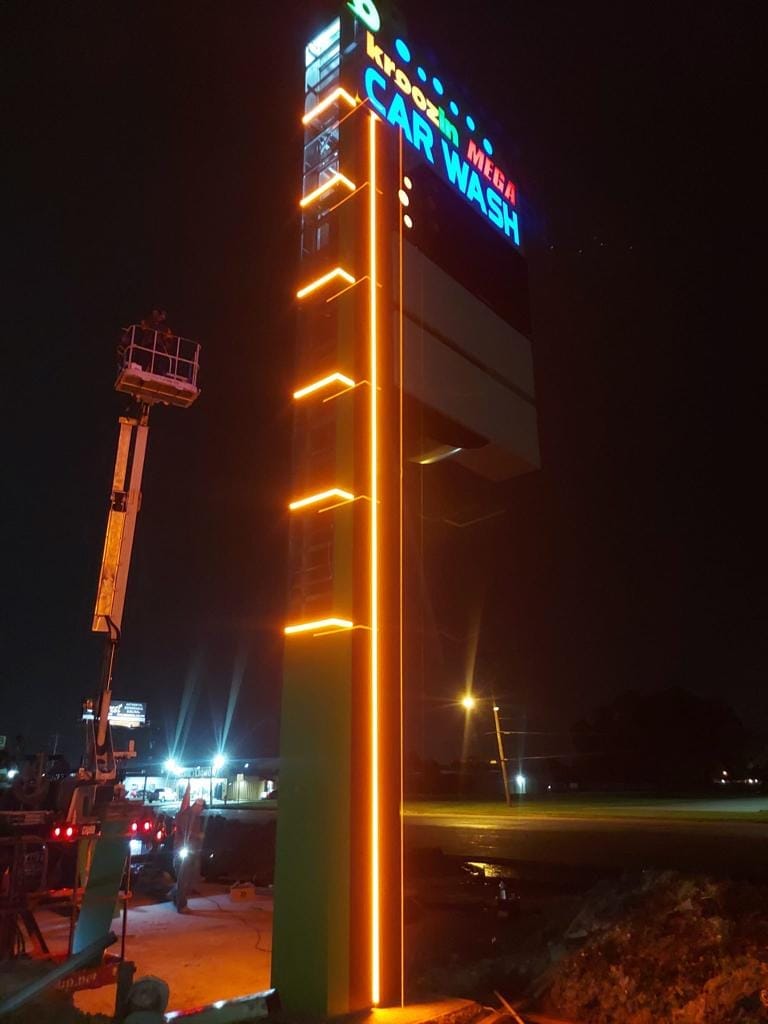
Pylon signs are often used near roads or property entrances where long-distance visibility matters. They are common for gas stations, retail plazas, shopping centers, hotels, and roadside businesses. In a wayfinding system, a pylon sign usually acts as the first visual anchor.
A custom pylon sign may include illuminated sign faces, tenant panels, gas station price displays, or a branded cabinet structure. For large outdoor signs, buyers should review height, wind load considerations, steel structure, sign cabinet fabrication, and local project requirements with the supplier or engineer.
Monument Signs

Monument signs are lower than pylon signs and are often placed near property entrances. They work well for hotels, office parks, medical centers, commercial buildings, and residential communities where the sign should feel more integrated with the surrounding architecture.
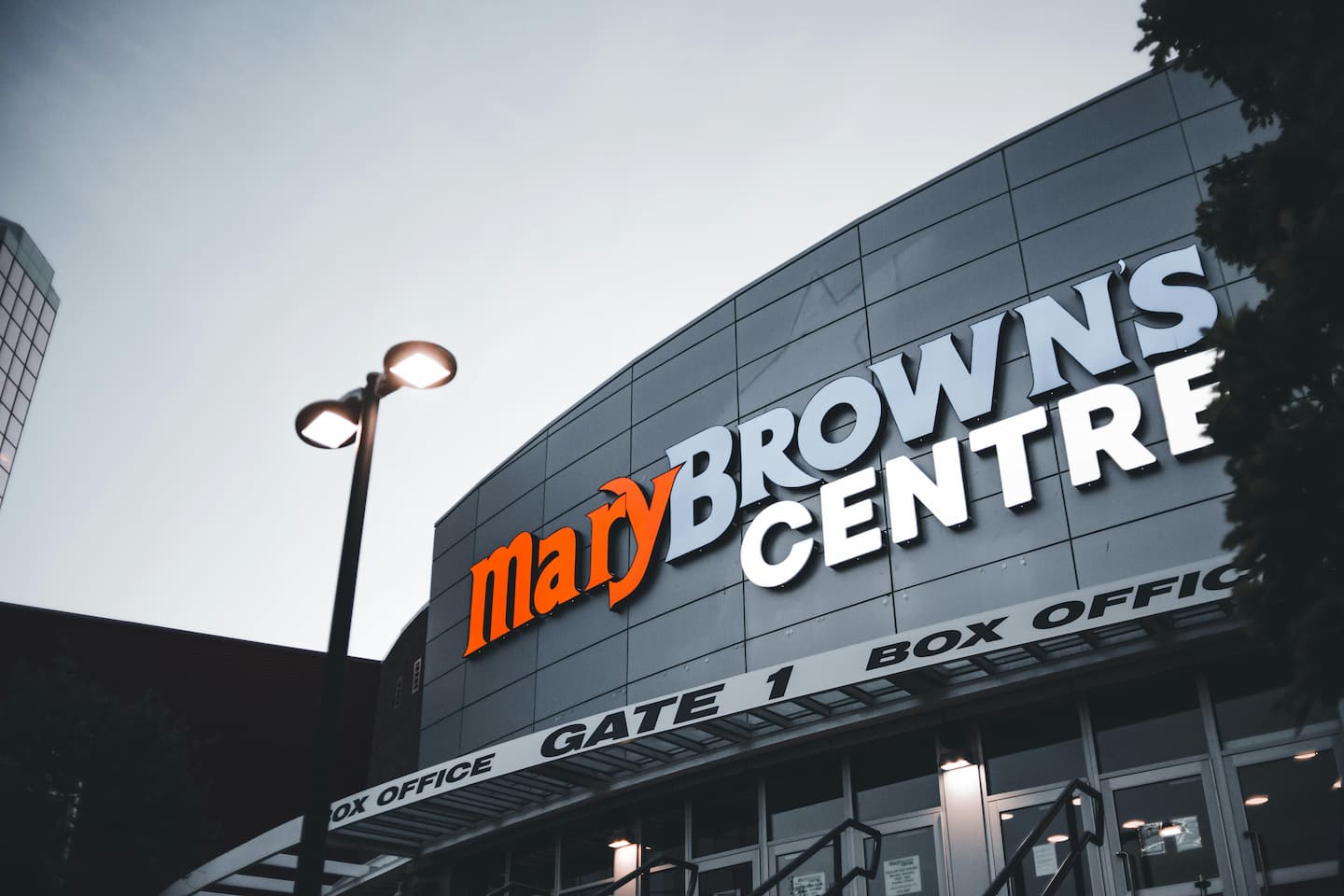
Monument signs may use metal panels, acrylic faces, dimensional letters, stone-style finishes, or internal illumination depending on the project.
Post and Panel Signs
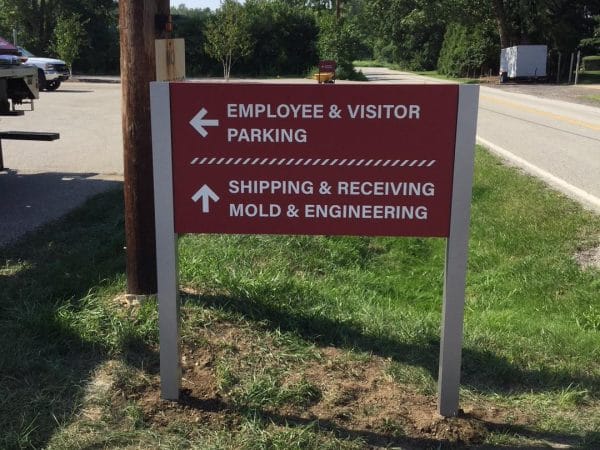
Post and panel signs are useful for campuses, parks, business parks, parking areas, and directional systems. They are usually simpler than large pylon signs but can be highly practical when information needs to be placed at several points across a site.
For B2B projects, buyers should confirm post material, panel thickness, surface finish, installation environment, and whether graphics or panels may need replacement later.
Directory Signs
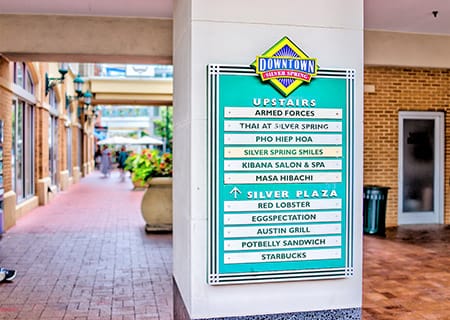
Directory signs help visitors find tenants, buildings, departments, or service areas. They are especially useful for multi-tenant properties, retail plazas, business parks, hotels, and medical facilities.
A good directory sign should have a clear information hierarchy. Too many names, small text, or poor spacing can reduce readability.
Directional Signs
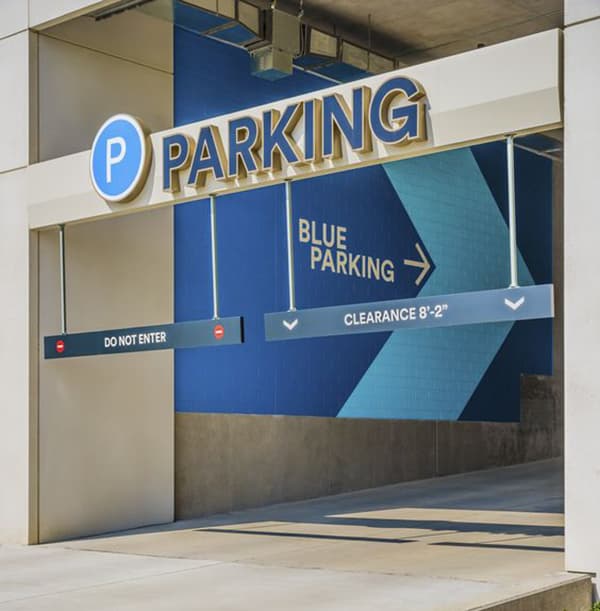
Directional signs guide drivers and pedestrians to parking, entrances, exits, delivery areas, restrooms, reception points, or specific buildings. These signs may be smaller, but they play an important role in the full visitor journey.
How These Signs Work Together in a Wayfinding System
Outdoor wayfinding signage should be planned as a system, not as separate signs. Each sign type should answer a different question for the visitor.
A pylon sign may answer: “Is this the right property?”
A monument sign may answer: “Where is the entrance?”
A directory sign may answer: “Which tenant or building do I need?”
A directional sign may answer: “Which way should I go next?”
When these signs work together, the visitor journey becomes easier. The design should also maintain consistent colors, fonts, materials, lighting style, and brand identity. This is especially important for commercial properties with multiple buildings, tenants, or traffic routes.
Pro Tip
For outdoor wayfinding signage, do not design each sign as an isolated object. Buyers should review the full visitor journey, including roadside visibility, entrance identification, parking guidance, tenant information, and pedestrian movement.
Design Factors for Outdoor Wayfinding Signage
Good wayfinding sign design is not only about visual style. It should help people read information quickly and make decisions in the real environment.
Visibility and Viewing Distance
A sign used by drivers must be readable from a different distance and angle than a sign used by pedestrians. Road speed, viewing direction, installation height, surrounding buildings, landscaping, and lighting can all affect visibility.
For outdoor wayfinding signs, buyers should consider where the sign will be viewed from, how long the viewer has to read it, and whether the sign will be used during the day, at night, or in mixed lighting conditions.
Information Hierarchy
Not every piece of information should have the same visual weight. A property name, tenant name, arrow, parking instruction, or building number may need a different size or layout priority.
For directory signs and multi-tenant signs, information hierarchy is especially important. A crowded layout may look complete on paper but become difficult to read on site.
Brand Consistency
Commercial wayfinding signs should match the overall brand or property identity. Colors, typography, material finishes, and illumination style should feel consistent across pylon signs, monument signs, directory signs, and directional signs.
This is important for brand owners, developers, and signage distributors managing multi-location or multi-sign projects.
Materials, Lighting, and Structure for Outdoor Wayfinding Signs
Outdoor signage must handle real environmental conditions. Materials should be selected based on project location, sign size, illumination needs, maintenance expectations, and installation method.
| Component | Common Use | What Buyers Should Check |
|---|---|---|
| Steel Structure | Pylon signs and large freestanding signs | Strength, coating, installation method, project requirements |
| Aluminum Cabinet | Sign cabinets, panels, decorative covers | Welding quality, surface finish, corrosion protection |
| Acrylic Sign Faces | Illuminated logos and sign faces | Light transmission, color, thickness, outdoor suitability |
| Polycarbonate Sign Faces | Impact-resistant outdoor sign faces | Durability, clarity, forming needs, environment |
| LED Modules | Illuminated signs and sign cabinets | Layout, brightness, color consistency, service access |
| Surface Finish | Exterior appearance and brand color | Paint quality, color matching, outdoor exposure |
| Sealing and Access | Outdoor durability and maintenance | Weatherproof sealing, drainage, ventilation, access panels |
Steel structure is often used when a sign needs stronger support. Aluminum is commonly used for cabinets, panels, and decorative covers because it can be fabricated into different shapes and finished for outdoor use. Acrylic and polycarbonate sign faces are used for illuminated or graphic sign panels. LED modules are often used for illuminated signs, but the lighting effect depends on layout, cabinet depth, diffusion, and sign face material.
Pro Tip
For illuminated outdoor signs, the final effect depends on more than brightness. Sign face material, cabinet depth, LED spacing, diffusion, weatherproof sealing, and maintenance access all affect long-term readability.
Common Mistakes When Planning Outdoor Wayfinding Signs
Many signage problems start before production. Buyers can avoid unnecessary revisions by reviewing the system early.
| Common Problem | Why It Matters | How to Reduce the Risk |
|---|---|---|
| Too much information on one sign | Reduces readability | Use clear hierarchy and separate signs when needed |
| Inconsistent design across sign types | Weakens brand image | Use consistent colors, fonts, materials, and finishes |
| Ignoring night visibility | Limits usefulness after dark | Review LED lighting, sign face material, and diffusion |
| Poor placement | Visitors may miss the sign | Check viewing angle, traffic flow, and site layout |
| No maintenance access | Makes future service difficult | Plan access panels, replaceable parts, and wiring access |
| Weak material planning | May affect outdoor performance | Match materials to environment and project requirements |
Important Note
Outdoor signage requirements can vary by location, local code, installation method, weather exposure, electrical design, and structural needs. Buyers should confirm project-specific details with the supplier, installer, engineer, or local authority before production.
What Buyers Should Prepare Before Requesting a Custom Wayfinding Sign Quote
A clear inquiry helps a custom signage manufacturer review the project more accurately. It also reduces back-and-forth communication during the early quotation stage.
| Information to Prepare | Why It Matters |
|---|---|
| Site plan or layout | Helps plan sign locations and visitor flow |
| Logo and brand guidelines | Helps maintain color, font, and visual consistency |
| Required sign types | Pylon, monument, directory, post and panel, or directional signs |
| Approximate sizes | Helps estimate structure, cabinet, materials, and fabrication method |
| Outdoor environment | Affects material, lighting, sealing, and finish choices |
| Illumination needs | Helps review LED layout, sign face material, and wiring access |
| Tenant or directional information | Helps organize panel layout and information hierarchy |
| Drawings or reference images | Helps review structure and fabrication details |
| Quantity and project schedule | Helps plan production, packaging, and delivery coordination |
Why Work with a Custom Signage Manufacturer?
For project-based signage, working with a custom signage manufacturer can help buyers review practical details before production. A supplier that understands sign fabrication can support material selection, aluminum cabinet fabrication, sign face options, LED module layout, steel structure, surface finish, packaging, and communication across multiple sign types.
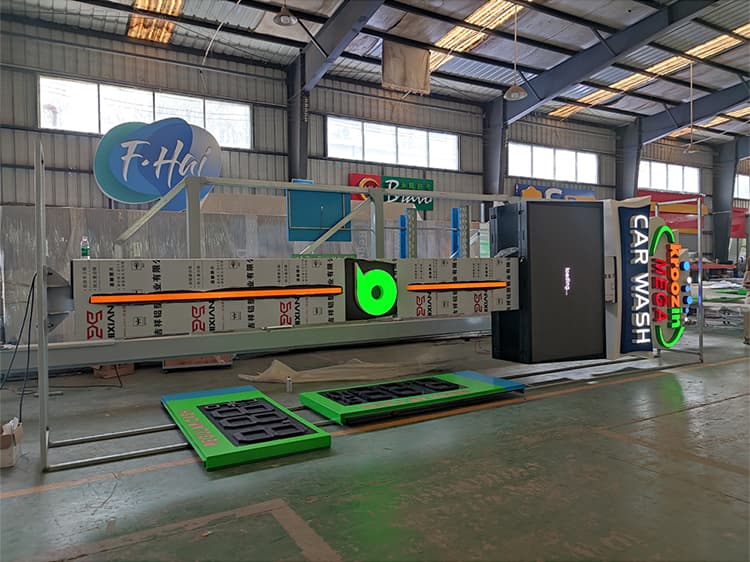
This can be useful for sign companies, contractors, developers, gas station buyers, retail plaza owners, design firms, and commercial signage suppliers that need custom outdoor signs rather than standard off-the-shelf products.
Grandview Sign Factory supports custom pylon signs, gas station signage, gas station price signs, illuminated signs, monument signs, LED channel letters, sign cabinets, and commercial signage fabrication for international B2B projects. Buyers can share drawings, logo files, installation locations, reference images, and project requirements for review.
FAQ
Outdoor wayfinding signage is a system of exterior signs that helps visitors find entrances, tenants, parking areas, service points, buildings, or routes within a commercial property.
Common types include pylon signs, monument signs, post and panel signs, directory signs, directional signs, illuminated signs, and commercial property signs.
Yes. Pylon signs are often used as the first major visibility point in an outdoor wayfinding system, especially near roads, gas stations, retail plazas, shopping centers, and roadside businesses.
Common materials and components include steel structures, aluminum cabinets, acrylic sign faces, polycarbonate sign faces, LED modules, printed panels, surface finishes, and weatherproof sealing systems.
Yes. Many outdoor wayfinding signs can be illuminated with LED modules, internally lit sign cabinets, illuminated sign faces, or dimensional lettering. The best option depends on the sign type, viewing distance, and project environment.
Pylon signs are better for long-distance roadside visibility. Monument signs work well for entrances and architectural settings. Post and panel signs are useful for flexible directional information across campuses, parks, parking areas, or commercial sites.
Prepare your site plan, logo files, brand guidelines, required sign types, approximate sizes, installation environment, illumination needs, tenant or directional information, drawings, reference images, quantity, and project schedule.
Conclusion
Outdoor wayfinding signage is not just a group of separate signs. For commercial projects, it is a complete communication system that helps visitors move from the road to the entrance, from the entrance to the parking area, and from the parking area to the right tenant, building, or service point.
A strong wayfinding plan should consider visibility, placement, information hierarchy, materials, lighting, structure, weather resistance, maintenance access, and brand consistency. Pylon signs, monument signs, post and panel signs, directory signs, and directional signs each play a different role.
For B2B buyers, preparing clear project information before requesting a quote can make the sourcing process more efficient. Site plans, logos, sign type lists, sizes, drawings, installation environments, and lighting needs all help the manufacturer review the project more accurately.
Grandview Sign Factory provides custom outdoor signs, pylon signs, monument signs, illuminated signs, sign cabinets, sign faces, and commercial signage fabrication for international projects. If you are planning an outdoor wayfinding signage project, send your project requirements for a custom fabrication review.
References and Further Reading
The following neutral resources are provided for readers who want to review general sign terminology, sign code considerations, electric sign safety references, outdoor structure criteria, visibility-related guidance, and material information for sign faces. They are included to support technical understanding, not to compare competitor pricing or product claims.
International Sign Association — Glossary of Sign Terms
Useful for reviewing common signage terminology such as sign faces, cabinets, channel letters, illumination, and other terms that may appear in outdoor wayfinding signage projects. View source
International Sign Association — Sign Codes and Regulations
Helpful background for understanding why outdoor signage projects may need to consider local sign codes, permitting, location requirements, and project-specific regulatory review. View source
UL Solutions — Electric Sign and Sign Component Standards
Useful for readers who want to understand common electric sign safety references, including electric signs, sign components, LED sign kits, retrofit kits, and related electrical code considerations. View source
International Sign Association — Sign Lighting
Useful for understanding the role of illuminated signs in commercial, communicative, wayfinding, and safety-related contexts. View source
FHWA — Manual on Uniform Traffic Control Devices
Although commercial wayfinding signs are different from official traffic control devices, this resource provides useful background on signing, road user guidance, visibility, symbols, and communication in traffic environments. View source
ASCE — ASCE/SEI 7 Minimum Design Loads and Associated Criteria
Helpful background for understanding why large outdoor freestanding signs, pylon signs, and sign structures should consider project-specific design loads, including wind-related requirements. View source
ASTM International — PMMA Acrylic Plastic Sheet Specification
Useful for understanding PMMA acrylic sheet specification language, which may relate to acrylic sign faces used in illuminated wayfinding signs, directory signs, and sign cabinets. View source
Covestro — Makrolon Polycarbonate Material Information
General material information for polycarbonate, including transparency, strength, dimensional stability, and heat resistance references that may help buyers understand polycarbonate sign face options. View source
Note: Outdoor wayfinding signage requirements can vary by location, local code, installation method, electrical design, material grade, lighting requirements, wind exposure, and environmental conditions. Buyers should confirm project-specific details with their signage supplier, installer, engineer, or local authority before production and installation.