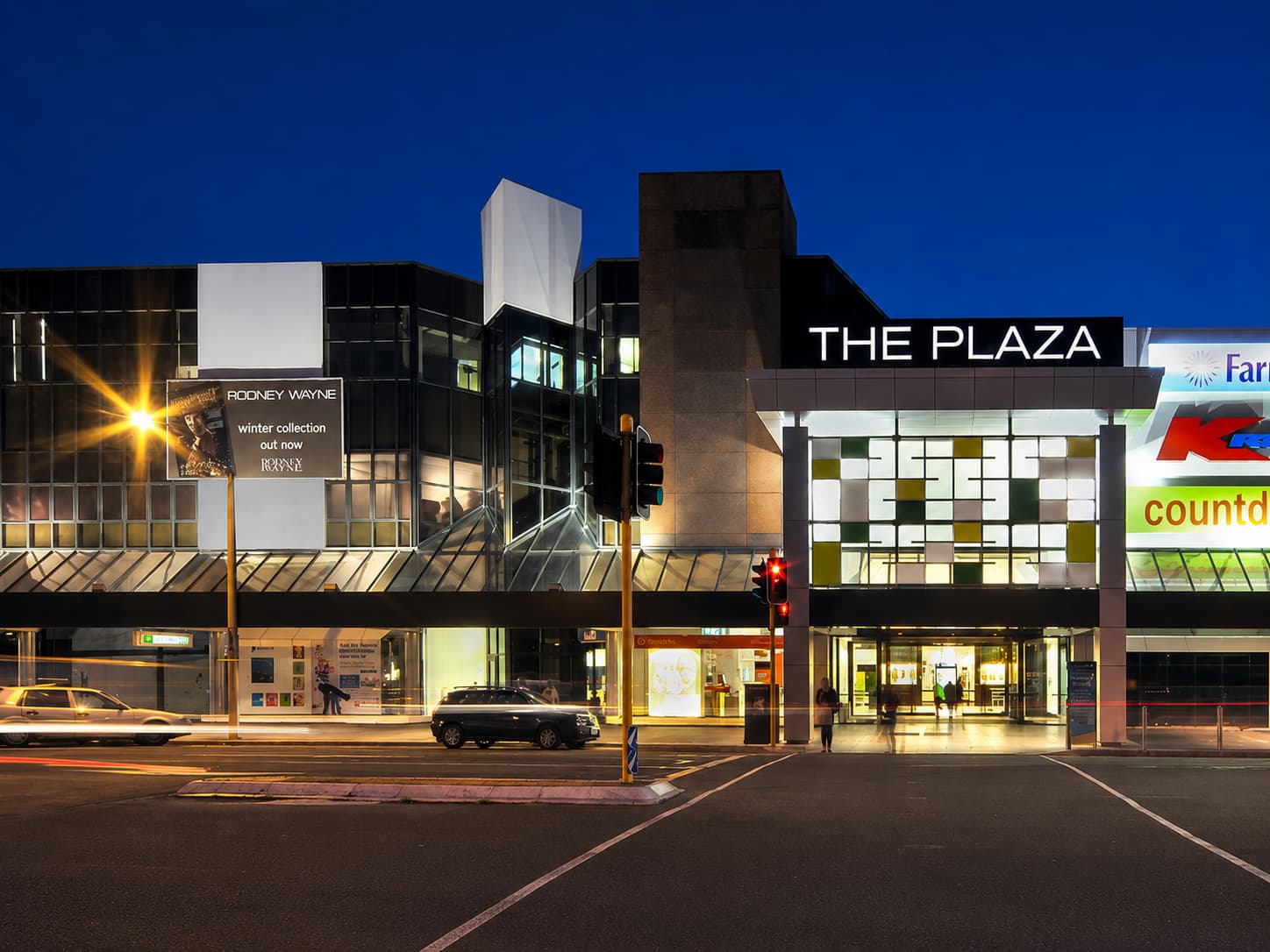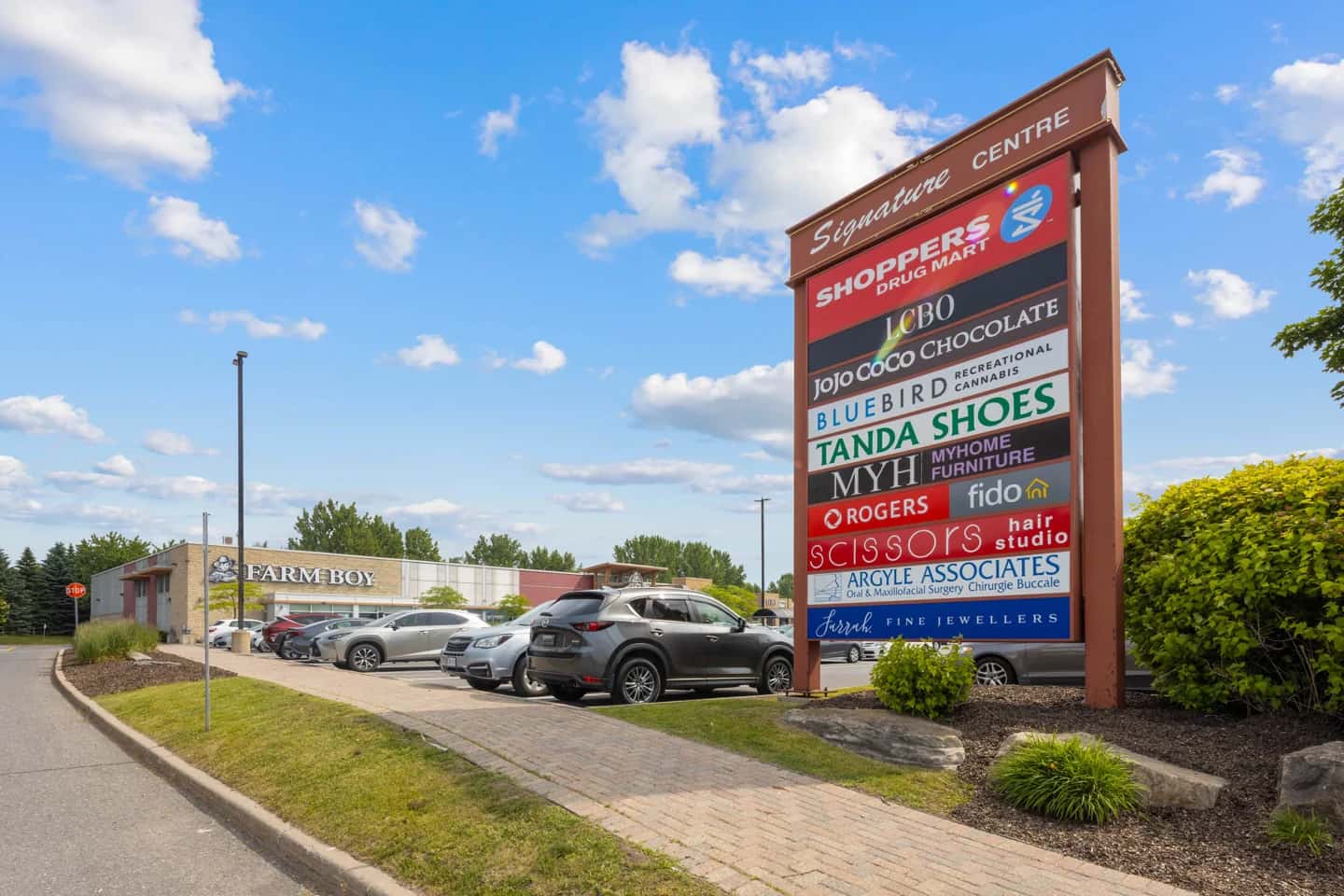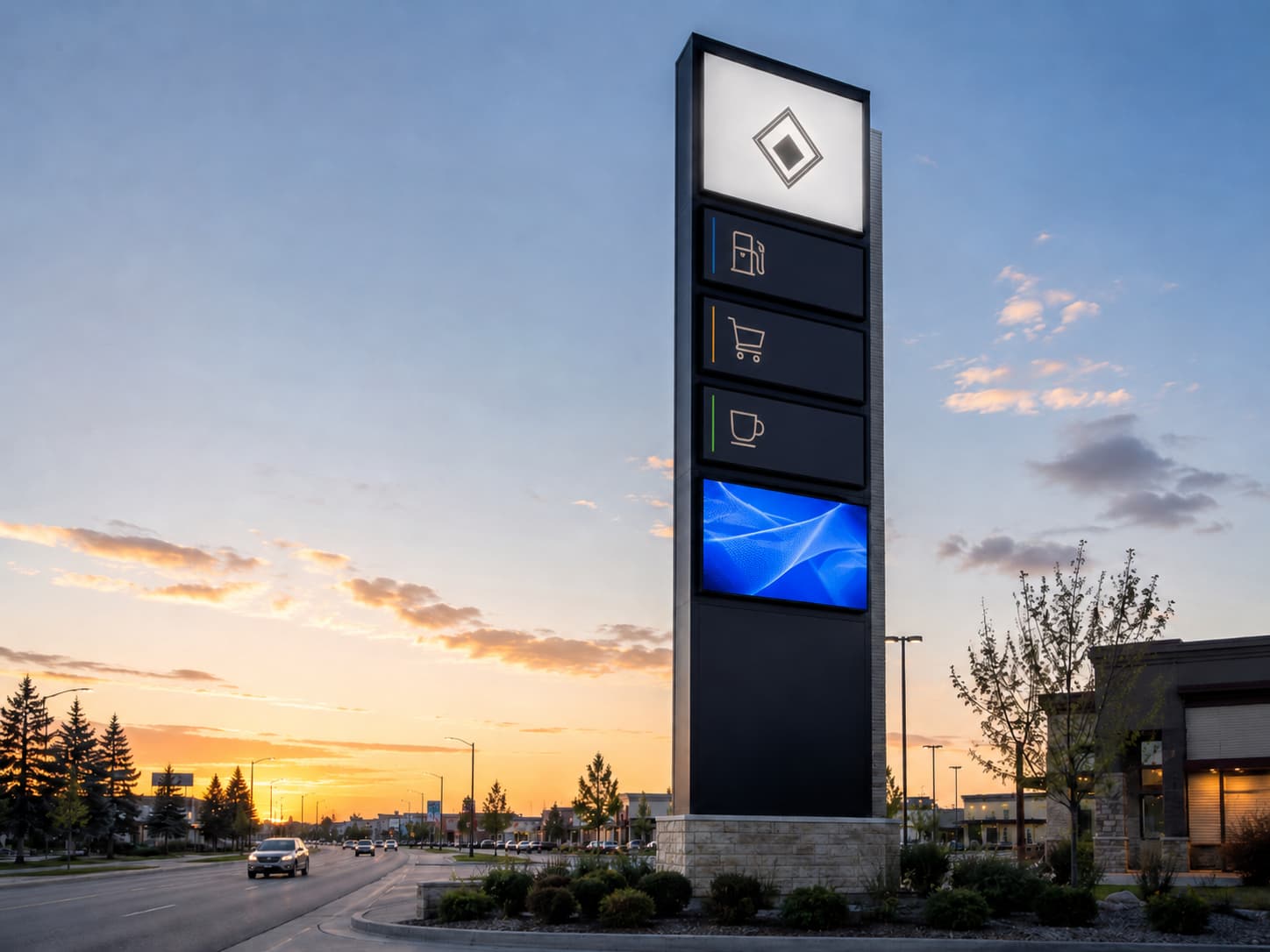


Pylon signage is one of the most important outdoor sign solutions for businesses that need to be seen from a distance. For gas stations, retail plazas, hotels, car washes, roadside restaurants, and commercial properties, a well-designed pylon sign can improve visibility, support brand recognition, and help visitors find the right location more easily.
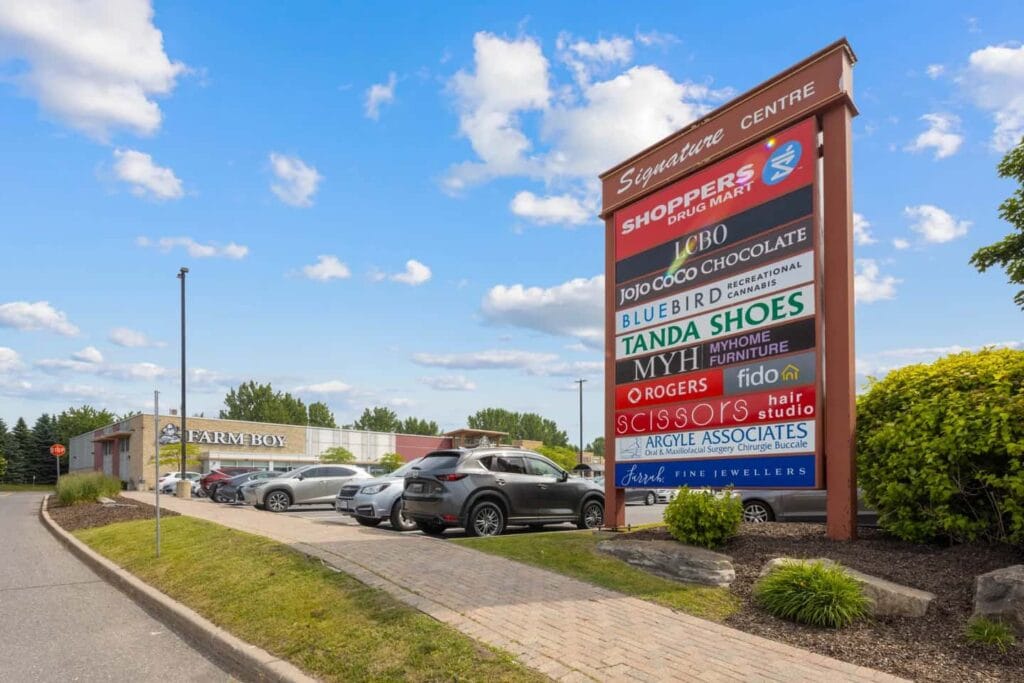
However, a pylon sign is not only about height. For B2B buyers, the real decision involves sign structure, cabinet fabrication, sign face material, LED lighting, weather resistance, installation environment, and long-term maintenance. A sign that looks attractive in a rendering may perform very differently after years of outdoor exposure if the materials, sealing, lighting layout, or structure are not properly considered.
This guide explains how to evaluate pylon signs for business projects from a practical sourcing perspective. It is written for sign companies, brand owners, gas station project buyers, retail plaza developers, contractors, design firms, and commercial signage distributors looking for custom pylon signs or a reliable signage fabrication partner.
What This Article Covers
This guide explains how to evaluate pylon signage from a practical B2B project perspective, including business visibility, common applications, material choices, lighting details, fabrication quality, and quote preparation.
Business Visibility
Understand how pylon signage supports long-distance visibility for roadside and commercial locations.
Common Applications
Compare applications such as gas stations, retail plazas, hotels, car washes, and roadside businesses.
Materials & Structure
Learn how sign faces, aluminum cabinets, steel structures, and LED modules affect sign quality.
Lighting Details
Review how LED layout, cabinet depth, diffusion, and sealing affect night readability.
Quote Preparation
See what buyers should prepare before requesting a custom pylon sign quote.
Custom Fabrication
See how a custom signage manufacturer can support project-based sign fabrication.
What Is Pylon Signage?
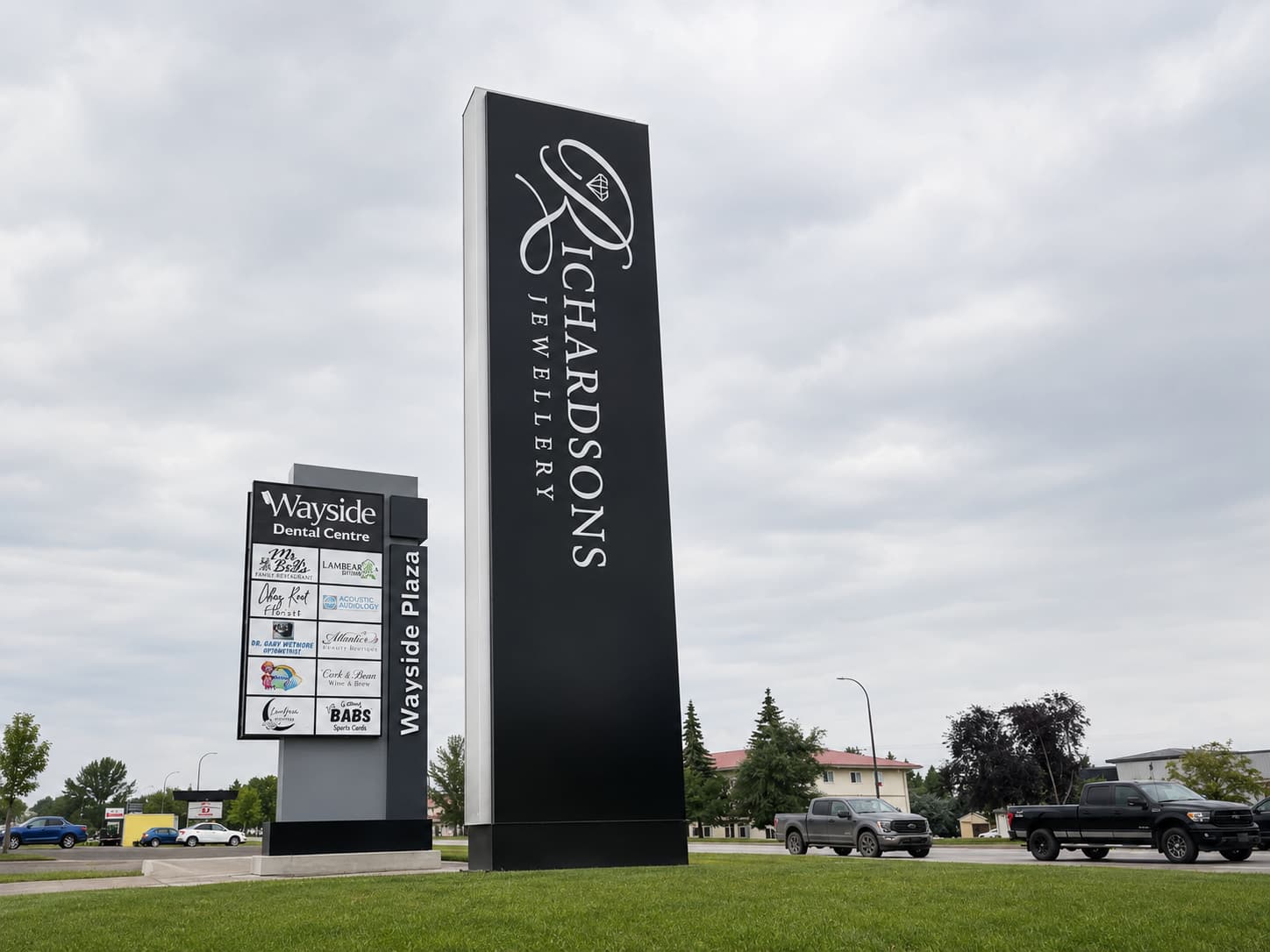
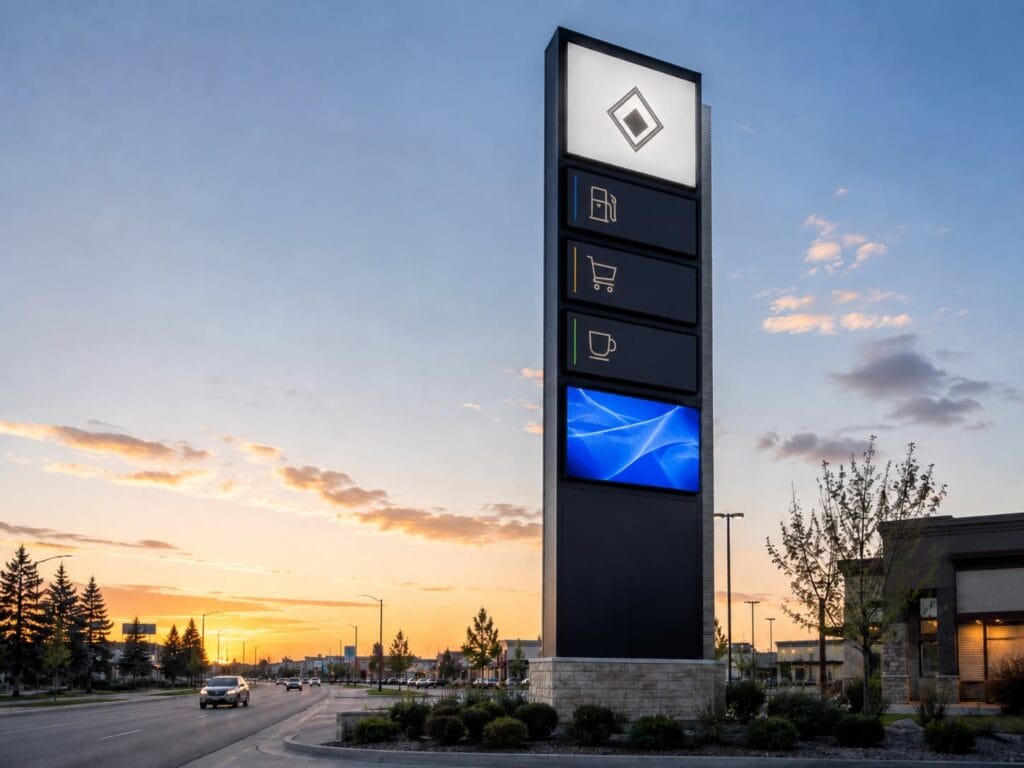
Pylon signage refers to freestanding outdoor signs that are usually supported by one or more poles or an internal steel structure. These signs are often taller than monument signs and are designed to be visible from roads, parking areas, commercial entrances, or high-traffic locations.
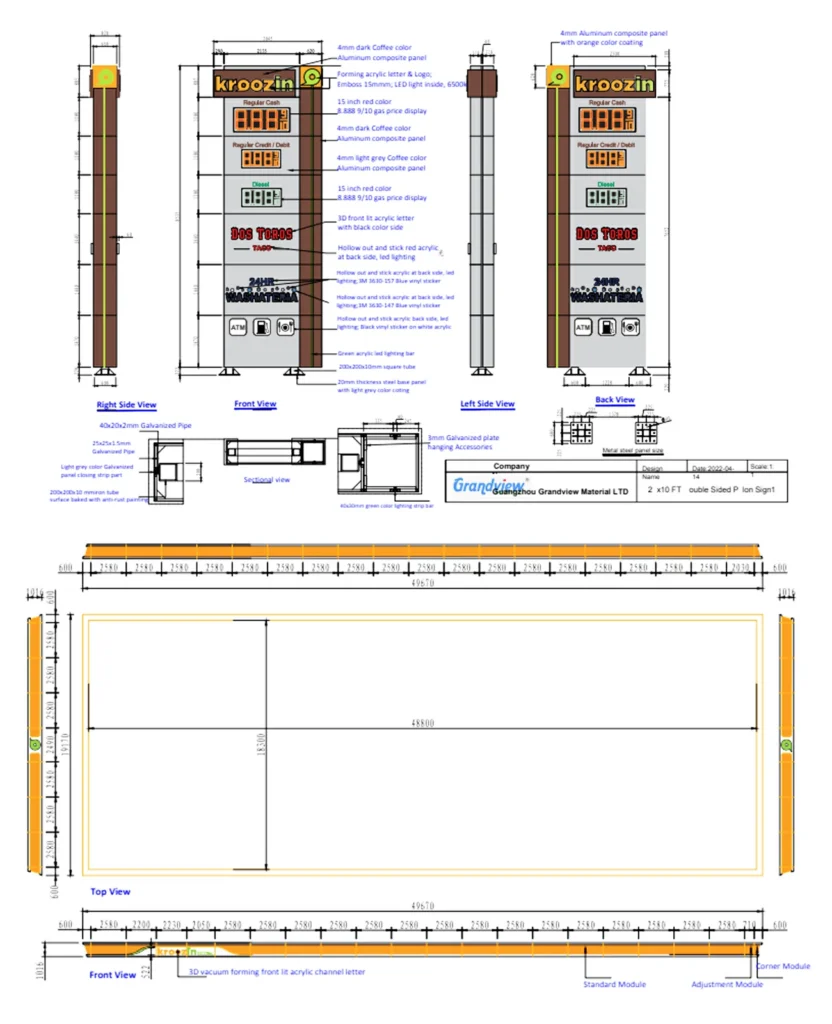
A pylon sign may be single-sided or double-sided. It may include illuminated sign faces, tenant panels, LED price displays, brand logos, directional information, or decorative cladding. Some pylon signs are simple pole signs, while others are more architectural structures with custom cabinets, shaped panels, lighting effects, and brand-specific finishes.
For business projects, pylon signage is commonly used when visibility from moving traffic is important. It helps people recognize a location before they arrive, especially in areas with many competing storefronts, signs, or roadside businesses.
Why Pylon Signs Matter for Business Visibility
For many commercial sites, the building itself is not enough to attract attention. A store may be set back from the road, a gas station may need to display fuel prices clearly, or a retail plaza may need to show multiple tenants in one structure. In these cases, pylon signs help connect the business with passing traffic.
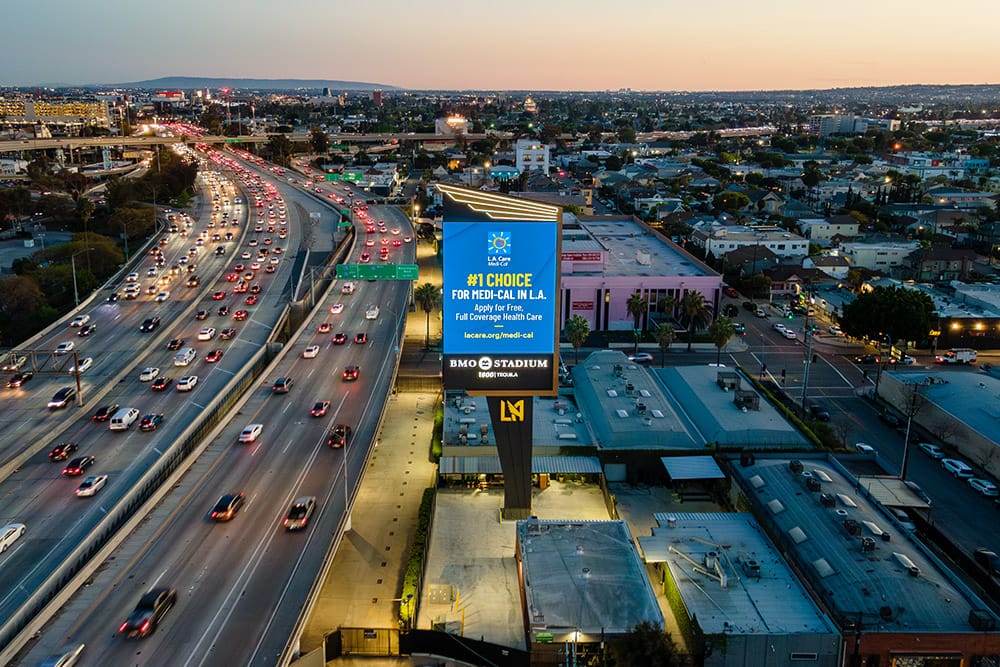
The main value of pylon signage is visibility. A tall, well-positioned sign can help drivers identify a business before reaching the entrance. At night, illuminated pylon signs can support brand recognition when storefront signs or building details are less visible.
Good pylon sign design should consider more than size. Buyers should think about viewing distance, traffic direction, surrounding buildings, sign height restrictions, brand layout, lighting performance, and maintenance access. For outdoor business signs, these details can affect both short-term appearance and long-term usability.
Common Applications of Pylon Signs
Different business environments require different pylon sign designs. A gas station, retail plaza, and hotel may all use pylon signage, but their priorities are not the same.
| Application | Common Signage Need | Key Design Priority |
|---|---|---|
| Gas stations | Brand logo, fuel price display, roadside visibility | Clear pricing, night readability, durable outdoor structure |
| Retail plazas | Multi-tenant panels, entrance identification | Replaceable tenant panels, balanced layout, easy maintenance |
| Hotels and restaurants | Brand recognition and guest guidance | Visibility from road, clean brand presentation, illumination |
| Car washes and service businesses | Fast recognition and entrance direction | Bold graphics, traffic-facing layout, outdoor durability |
| Commercial properties | Main entrance or property identification | Professional appearance, structure stability, long-term finish |
Gas Station Pylon Signs
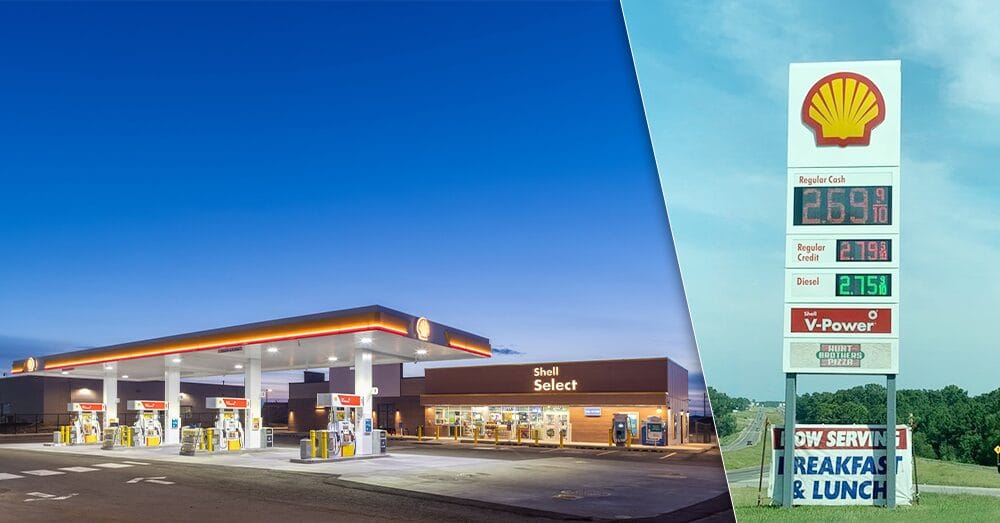
Gas station pylon signs often need to combine brand identity with practical information such as fuel prices. For these projects, LED price displays, readable digits, weatherproof construction, and easy maintenance are important. The sign must be visible during both daytime and nighttime conditions.
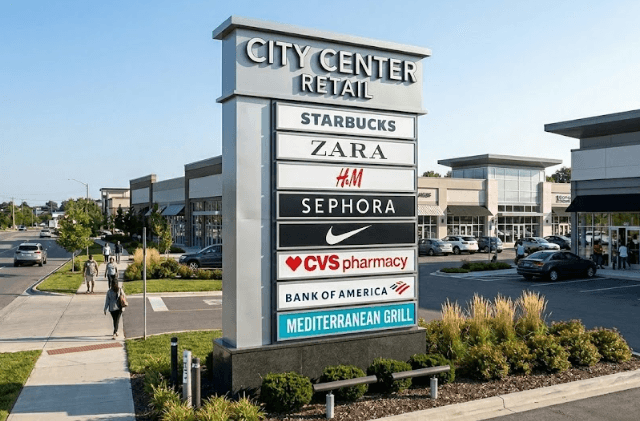
Retail Plaza and Multi-Tenant Pylon Signs
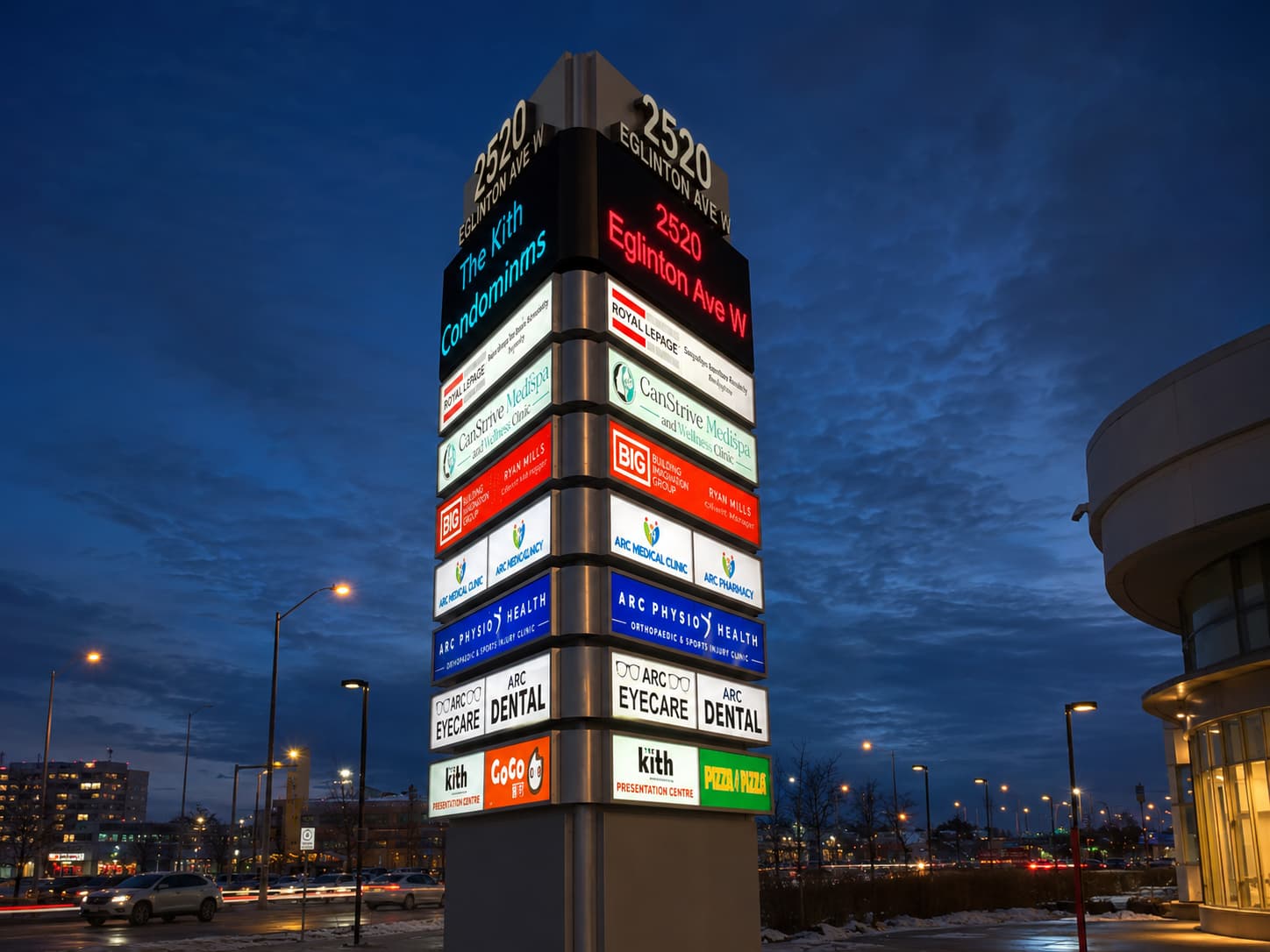
Retail plaza signs often include several tenant panels in one structure. Buyers should consider how panels can be replaced when tenants change. A good layout should balance the main property brand with tenant visibility without making the sign crowded or difficult to read.
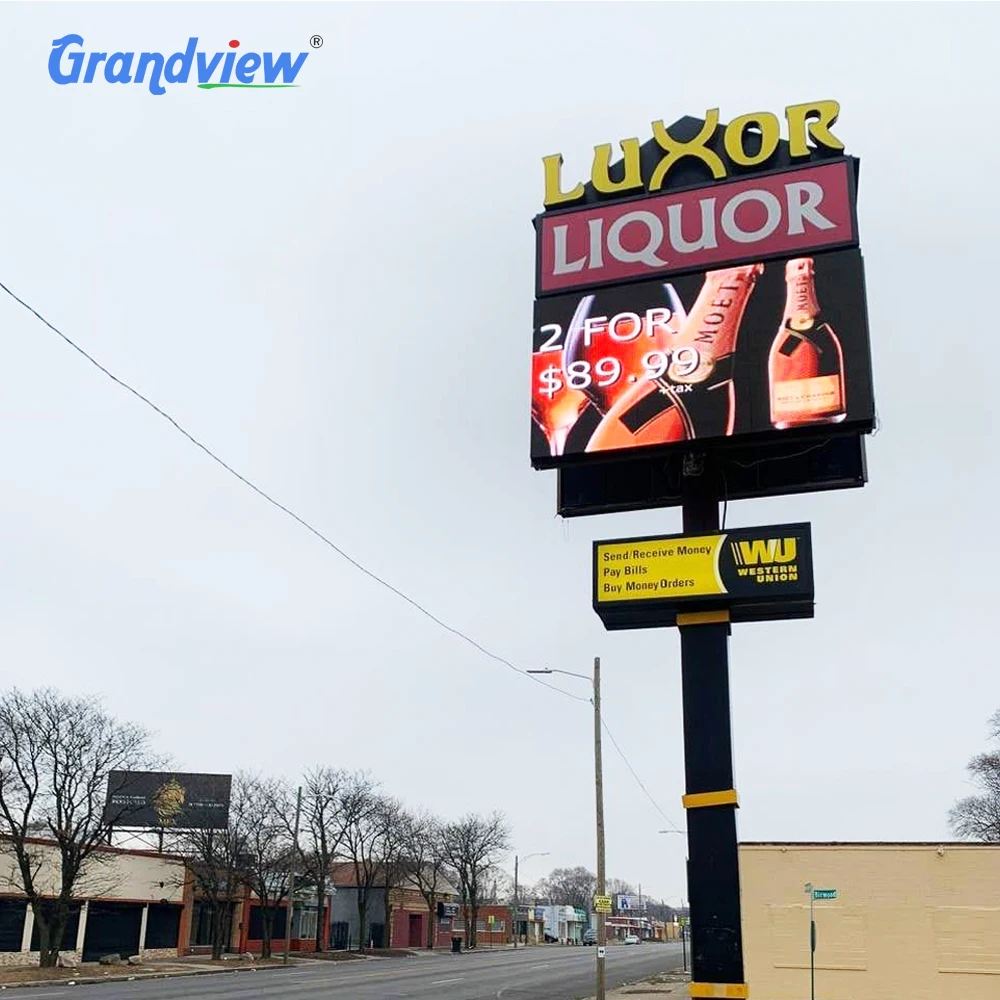
Hotels, Restaurants, and Roadside Businesses
For hotels and roadside restaurants, pylon signs help customers recognize the location before they pass it. Night readability is especially important for businesses that operate after dark or depend on travelers.
Key Design Factors for Custom Pylon Signs
A custom pylon sign should be designed around the project environment, not only around a front-view drawing. Before production, buyers should review how the sign will be seen, installed, illuminated, and maintained.
Height, Viewing Distance, and Location
Sign height and size are usually project-specific and may depend on local code, road conditions, surrounding buildings, and installation method. A taller sign is not always better. The goal is to create readable visibility from the right distance while meeting project requirements.
Brand Layout and Readability
A pylon sign should make the most important information easy to recognize first. For single-brand signs, the logo and main brand color should remain clear. For multi-tenant signs, panel hierarchy and spacing are important. Too much information can reduce readability, especially for drivers.
Daytime and Night Performance
A sign may look clear in daylight but perform poorly at night if the lighting layout is not considered. For illuminated pylon signs, sign face material, LED spacing, cabinet depth, and diffusion all influence the final effect.
Pro Tip
For outdoor pylon signage, do not judge the design only from a front-view rendering. Buyers should also review viewing distance, night readability, surrounding traffic, installation environment, and maintenance access before production.
Materials Used in Outdoor Pylon Signage
Material selection affects durability, appearance, lighting, maintenance, and fabrication cost. Buyers should confirm material details with the supplier or project engineer before production, especially for large outdoor signs.
| Material / Component | Common Role in Pylon Signage | What Buyers Should Check |
|---|---|---|
| Steel structure | Main support and internal strength | Project load requirements, coating, installation method |
| Aluminum cabinet | Sign cabinet, cladding, decorative body | Welding quality, surface finish, corrosion protection |
| Acrylic sign faces | Illuminated sign faces and brand graphics | Light transmission, color, thickness, outdoor suitability |
| Polycarbonate sign faces | Impact-resistant face option | Durability, clarity, forming needs, project environment |
| LED modules | Internal illumination | Layout, brightness, color consistency, maintenance access |
| Paint and finish | Brand color and exterior protection | Color matching, surface preparation, outdoor exposure |
Steel is commonly used for the structural frame because it provides strength. Aluminum is often used for sign cabinets and decorative covers because it is lighter and suitable for many outdoor fabrication needs when properly finished. Acrylic sign faces and polycarbonate sign faces are commonly used for illuminated graphics. LED modules are widely used for internal lighting because they can be arranged to support even illumination.
Lighting Options for Illuminated Pylon Signs
Illuminated pylon signs are widely used for gas stations, retail plazas, hotels, and roadside commercial properties. Lighting helps the sign remain visible after dark and can improve brand recognition in busy environments.
Common lighting considerations include LED module layout, cabinet depth, sign face diffusion, wiring access, brightness consistency, and sealing. Uneven LED layout may create bright spots or dark areas on the sign face. Poor sealing may increase maintenance issues in outdoor environments.
For gas station signage, LED price displays may also be integrated into the pylon sign. These displays should be designed for readability, service access, and project-specific electrical requirements.
Pro Tip
For illuminated pylon signs, the final effect depends on more than LED brightness. Sign face material, LED spacing, cabinet depth, diffusion, power design, and weatherproof sealing all affect night readability and long-term stability.
Pylon Signs vs Monument Signs
Many buyers compare pylon signs with monument signs during the planning stage. Both can be effective, but they serve different visibility needs.
| Factor | Pylon Signs | Monument Signs |
|---|---|---|
| Visibility | Better for long-distance and roadside visibility | Better for entrance-level and low-speed visibility |
| Typical use | Gas stations, retail plazas, roadside businesses | Business parks, schools, residential entrances |
| Structure | Tall pole or steel-supported structure | Low-profile base, often solid or architectural |
| Branding | Strong vertical brand presence | More integrated with landscape or entrance design |
| Best fit | Sites needing visibility from moving traffic | Sites needing a lower, architectural appearance |
A pylon sign is usually more suitable when a business needs to be seen from a road or from a distance. A monument sign may be better for property entrances, campuses, or locations where a lower architectural sign fits the environment better.
Fabrication Details That Affect Long-Term Quality
For B2B signage projects, manufacturing details matter. Two signs may use similar materials, but the final quality can differ because of cabinet fabrication, surface finish, LED layout, sign face selection, sealing, and maintenance design.
Cabinet Fabrication and Surface Finish
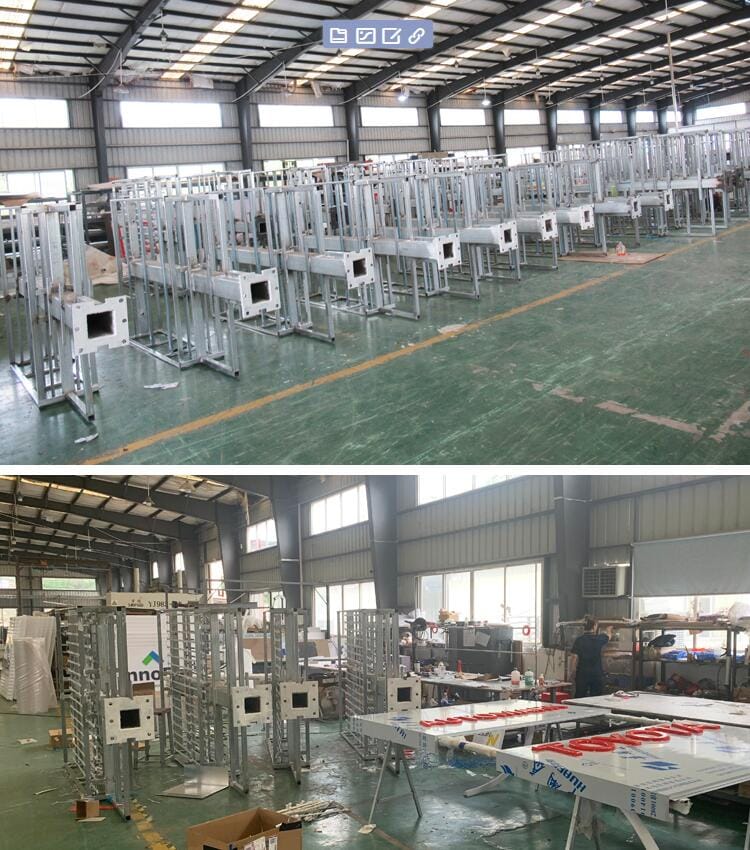
The sign cabinet affects both appearance and structure. Aluminum cabinet fabrication should consider bending, welding, surface preparation, paint finish, and assembly accuracy. A clean cabinet helps the sign look professional and supports brand presentation.
Sign Face Selection
Acrylic and polycarbonate sign faces are common options for outdoor pylon signage. The right choice depends on illumination, impact resistance needs, graphic method, thickness, forming requirements, and outdoor environment. Buyers should confirm samples or specifications before bulk production.
LED Layout, Sealing, and Maintenance Access
LED spacing affects lighting uniformity. Cabinet depth affects diffusion. Weatherproof sealing helps reduce outdoor exposure problems. Maintenance access is also important because LED modules, wiring, or tenant panels may need service or replacement over time.
Export Packaging and Modular Assembly
For international signage projects, packaging and assembly planning should not be ignored. Large sign cabinets, sign faces, and LED components need proper protection during shipping. Modular design can also help reduce transportation risk and support easier site assembly.
What Buyers Should Prepare Before Requesting a Custom Pylon Sign Quote
A clear inquiry helps the manufacturer review the project more accurately. Before requesting a quote, buyers should prepare the basic project information.
| Information to Prepare | Why It Matters |
|---|---|
| Logo or brand artwork | Helps confirm layout, colors, and sign face design |
| Approximate size or height | Helps estimate cabinet structure and fabrication method |
| Single-sided or double-sided design | Affects cabinet structure, lighting, and installation planning |
| Installation location or site photo | Helps evaluate visibility, environment, and project requirements |
| Illuminated or non-illuminated sign | Affects sign face material, LED layout, wiring, and maintenance |
| Application type | Gas station, retail plaza, hotel, car wash, or commercial property |
| Quantity and schedule | Helps plan production, packaging, and delivery coordination |
| Drawings or reference images | Helps review structure, materials, and fabrication details |
Why Work with a Custom Signage Manufacturer?
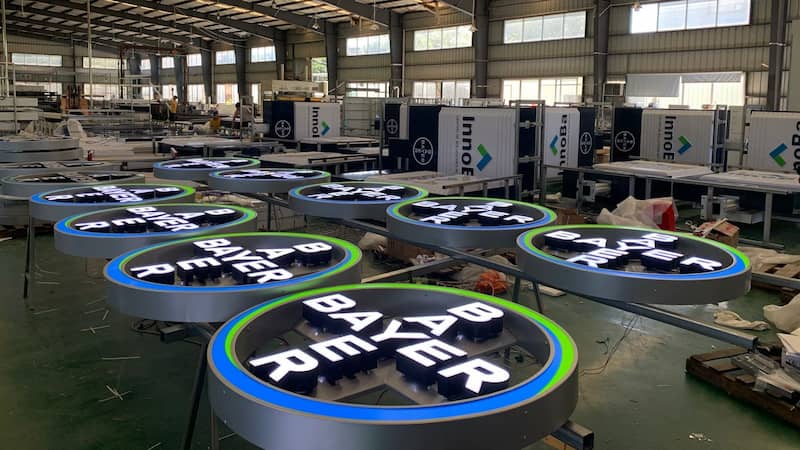
For project-based signage, working with a custom signage manufacturer can help buyers review practical details before production. This includes pylon sign design, aluminum cabinet fabrication, sign face material, LED lighting, steel structure, packaging, and project communication.
Grandview Sign Factory supports custom pylon signs, gas station signage, gas station price signs, illuminated signs, sign cabinets, and commercial signage fabrication for international B2B projects. For sign companies, contractors, developers, and brand owners, early technical communication can help reduce misunderstandings and make the production process smoother.
FAQ
Pylon signage is used to improve outdoor business visibility. It is commonly installed near roads, parking entrances, gas stations, retail plazas, hotels, car washes, and commercial properties.
Yes. Gas station pylon signs are commonly used for brand visibility and fuel price display. Buyers should consider LED price displays, night readability, weatherproof sealing, and maintenance access.
Common materials include steel structures, aluminum cabinets, acrylic sign faces, polycarbonate sign faces, LED modules, and outdoor paint finishes. The final material choice should depend on the project environment and design requirements.
Yes. Many pylon signs use internal LED illumination. The final lighting effect depends on LED layout, sign face material, cabinet depth, diffusion, and sealing.
Pylon signs are usually taller and better for long-distance visibility. Monument signs are lower and often used near property entrances or landscaped areas.
Prepare your logo, approximate size, installation location, single-sided or double-sided requirement, lighting needs, reference images, drawings if available, quantity, and project schedule.
Yes. Custom pylon signs can be designed with brand colors, logo panels, illuminated faces, tenant panels, gas price displays, and different cabinet shapes depending on the project.
Conclusion
Pylon signage is more than a tall outdoor sign. For commercial projects, it is a visibility tool, a brand display, and a practical way to guide customers to the right location. A successful pylon sign should consider design, materials, lighting, structure, sign face selection, sealing, maintenance, and long-term outdoor performance.
For B2B buyers, the best results usually come from sharing clear project details early. Logo files, size requirements, installation location, drawings, site photos, lighting needs, and application type can all help the manufacturer provide a more practical recommendation.
Grandview Sign Factory provides custom pylon signs, gas station signage, illuminated signs, sign cabinets, and commercial signage fabrication for international projects. If you are planning a custom pylon sign, gas station sign, or retail plaza signage project, send your project requirements for a custom fabrication review.
References and Further Reading
The following neutral resources are provided for readers who want to review general material standards, electric sign safety references, structural design considerations, sign code resources, and visibility-related guidance. They are included to support technical understanding, not to compare competitor pricing or product claims.
Covestro — Makrolon Polycarbonate Material Information
General material information for polycarbonate, including transparency, strength, dimensional stability, and heat resistance references that may help buyers understand polycarbonate sign face options. View source
UL Solutions — Electric Sign and Sign Component Standards
Useful for readers who want to understand common electric sign safety references, including UL 48 for electric signs, UL 879 for sign components, UL 879A for LED sign and sign retrofit kits, and related electrical code references. View source
ASCE — ASCE/SEI 7 Minimum Design Loads and Associated Criteria
Helpful background for understanding why outdoor structures should consider project-specific design loads, including wind-related requirements that may affect large freestanding sign structures. View source
International Sign Association — Sign Codes and Regulations
Industry resource for understanding sign codes, permitting, and regulatory considerations. Useful for reminding buyers that outdoor sign requirements can vary by project location. View source
International Sign Association — Glossary of Sign Terms
Useful for readers who want to review general sign industry terminology, including sign faces, cabinets, channel letters, and other common signage terms. View source
FHWA — Manual on Uniform Traffic Control Devices
Although commercial pylon signage is different from official traffic control signs, this resource is useful background for understanding general signing concepts such as visibility, guidance, symbols, and road user communication. View source
Note: Outdoor signage requirements can vary by project location, local code, installation method, electrical design, material grade, and environmental conditions. Buyers should confirm project-specific details with their supplier, installer, engineer, or local authority before production and installation.